Olive wood (Olea europaea) with stainless steel and epoxy inlays.
30 lbs. 30” x 30” x 3”
Tree of Life recalls one of humanity’s oldest and most enduring symbols of origin, continuity, and interconnected being. Carved from olive wood, the form bears the record of age and resilience in its dense grain and fractured voids, a material history shaped by pressure, drought, and persistence. It evokes not only the biblical Tree of Life — the ancient image of vitality sustained at the threshold between mortality and transcendence — but also the modern genetic tree of life, in which all living beings are understood as branching from shared ancestral origins.
Green resin flows through the work like sap reborn. It suggests circulation and renewal. Embedded spheres glint across the surface like dormant seeds of creation. Polished and reflective, the spheres mirror their surroundings, binding environment and observer into the work and emphasizing life as a system of interdependence rather than separation.
Both organism and artifact, what was once discarded is reorganized into a new equilibrium, where growth continues not by returning to an original state, but by adapting forward. Tree of Life affirms persistence as a creative force — life enduring through transformation, memory carried not despite fracture, but because of it.
Olive wood (Olea europaea) with stainless steel and epoxy inlays.
30 lbs. 30” x 30” x 3”
Tree of Life recalls one of humanity’s oldest and most enduring symbols of origin, continuity, and interconnected being. Carved from olive wood, the form bears the record of age and resilience in its dense grain and fractured voids, a material history shaped by pressure, drought, and persistence. It evokes not only the biblical Tree of Life — the ancient image of vitality sustained at the threshold between mortality and transcendence — but also the modern genetic tree of life, in which all living beings are understood as branching from shared ancestral origins.
Green resin flows through the work like sap reborn. It suggests circulation and renewal. Embedded spheres glint across the surface like dormant seeds of creation. Polished and reflective, the spheres mirror their surroundings, binding environment and observer into the work and emphasizing life as a system of interdependence rather than separation.
Both organism and artifact, what was once discarded is reorganized into a new equilibrium, where growth continues not by returning to an original state, but by adapting forward. Tree of Life affirms persistence as a creative force — life enduring through transformation, memory carried not despite fracture, but because of it.

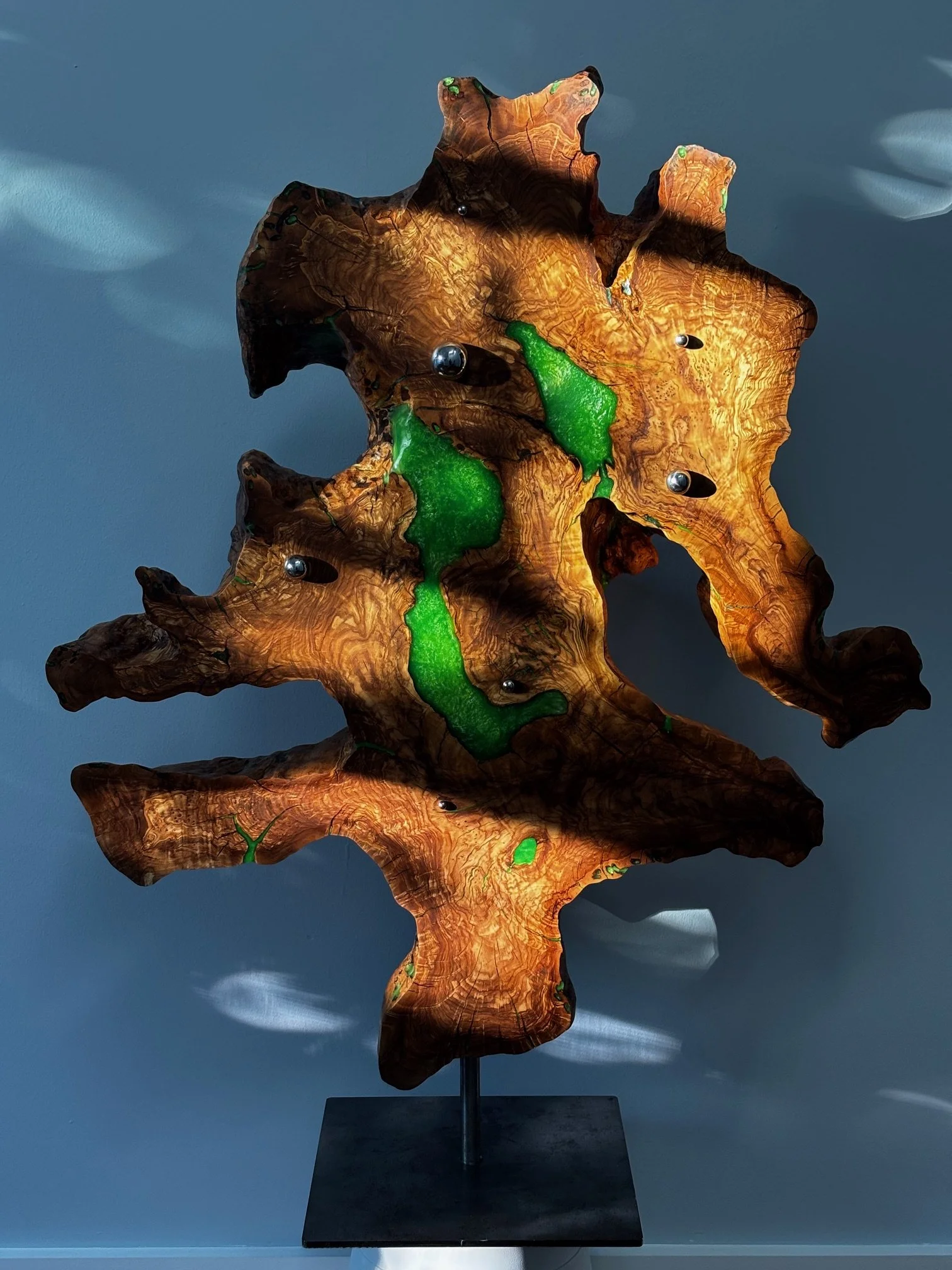 Image 1 of 6
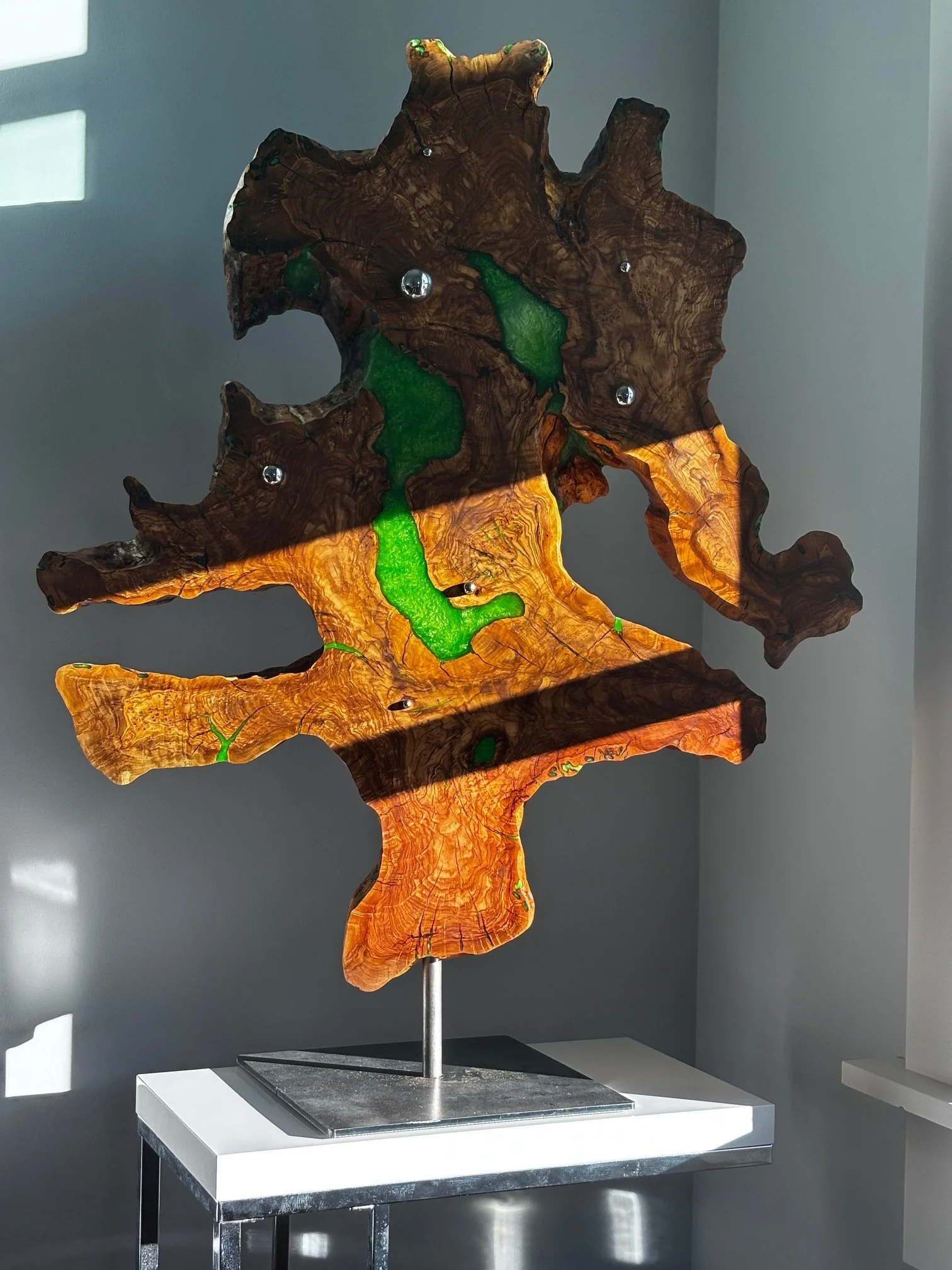 Image 2 of 6
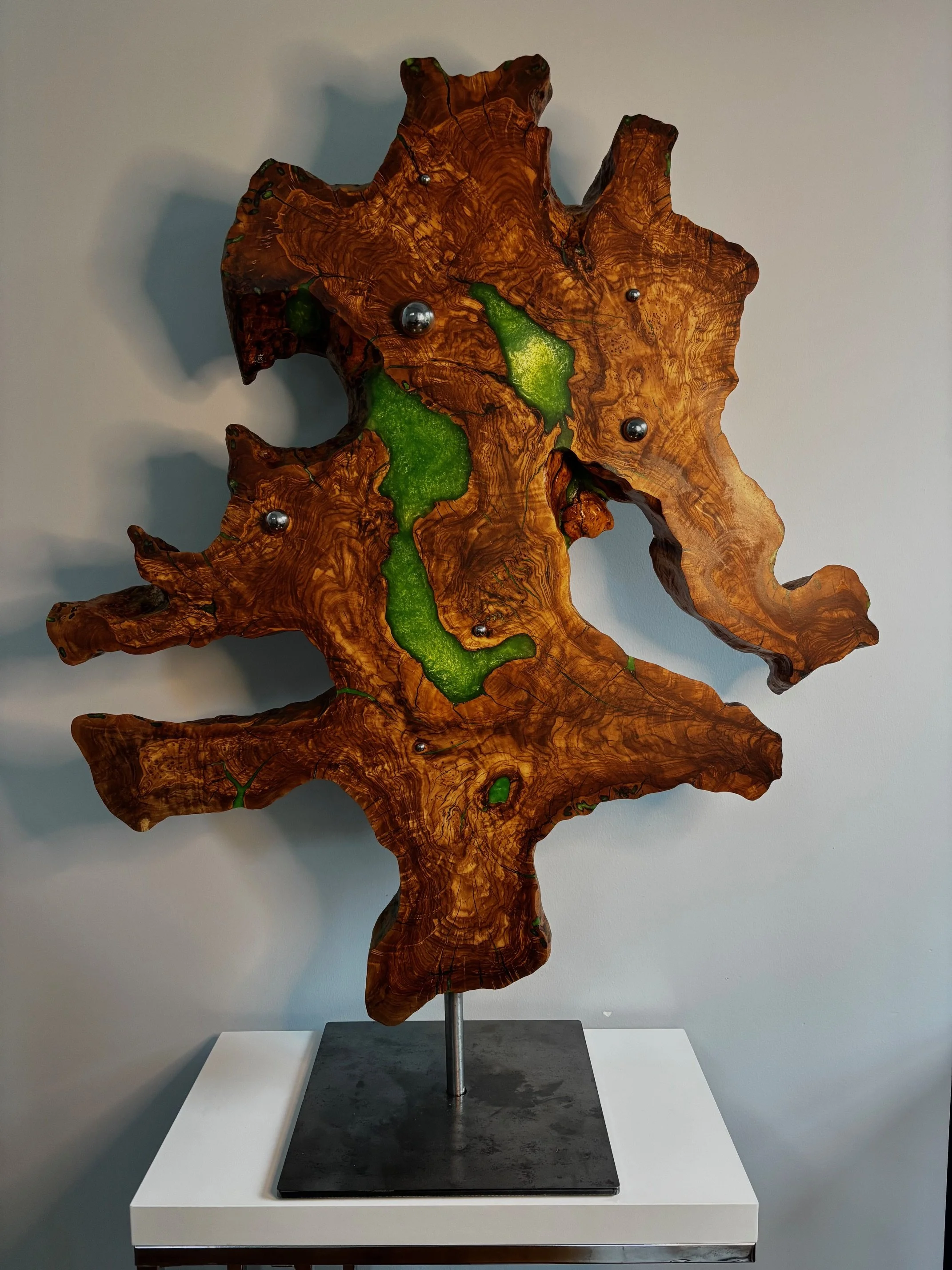 Image 3 of 6
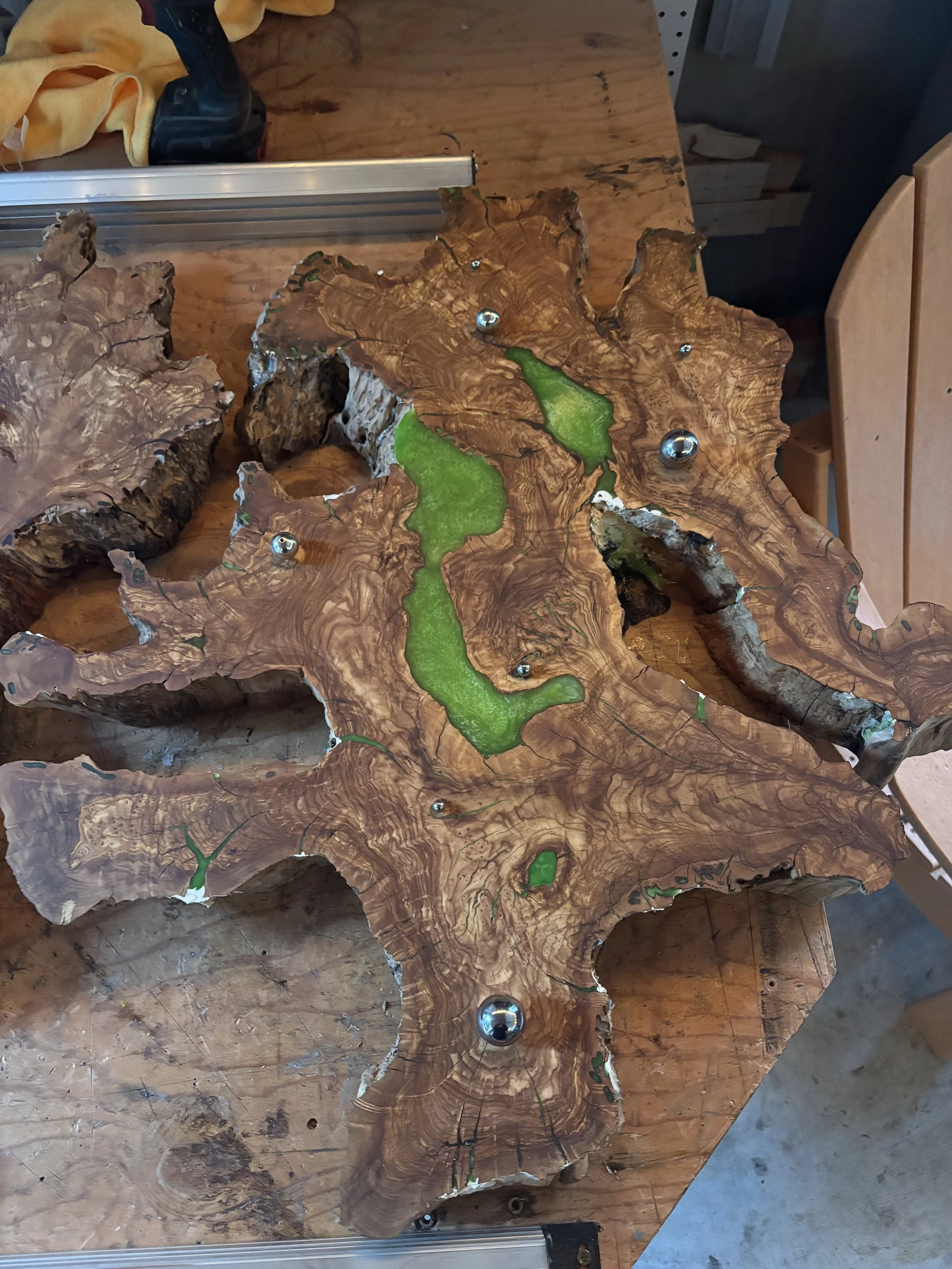 Image 4 of 6
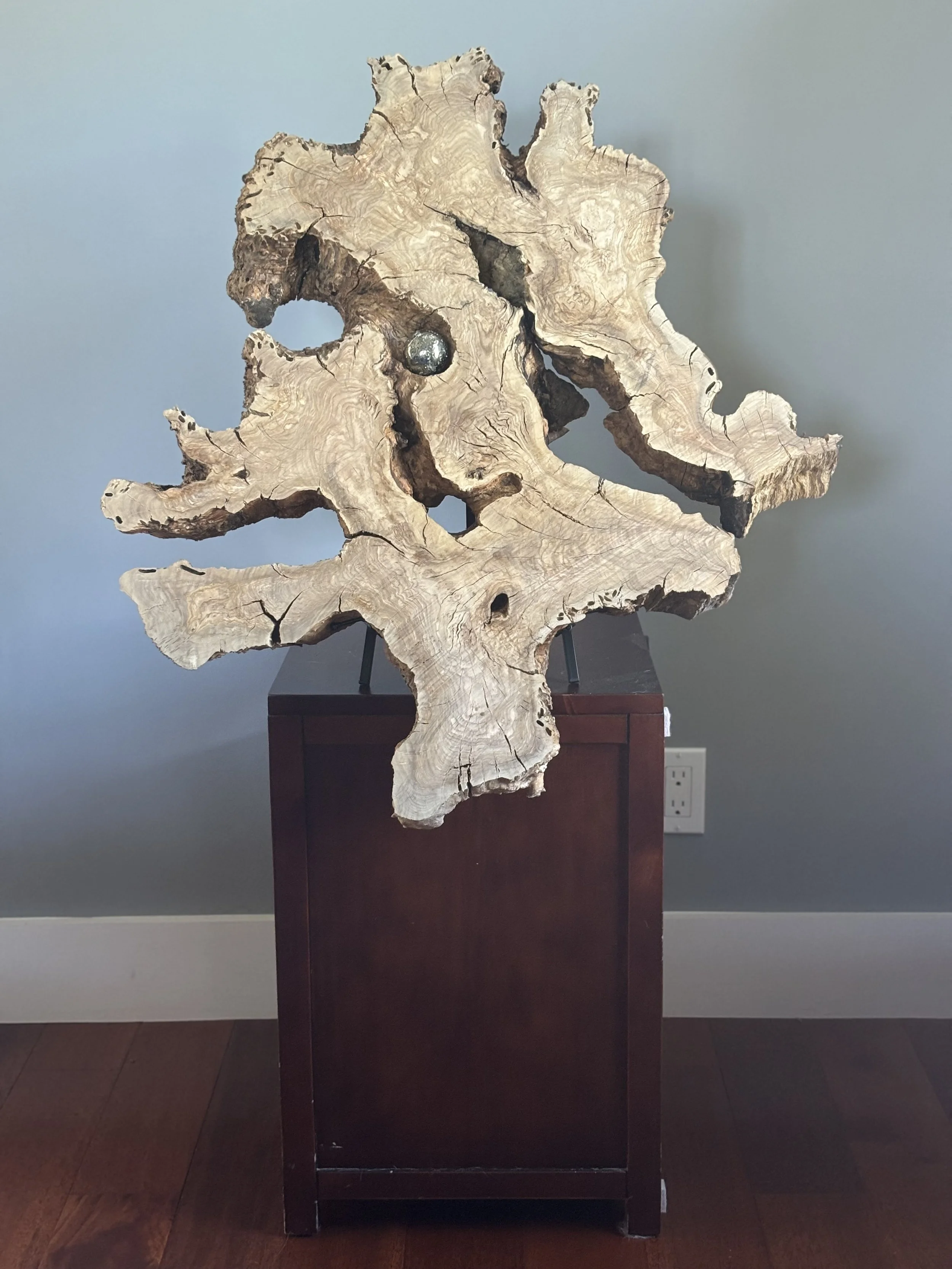 Image 5 of 6
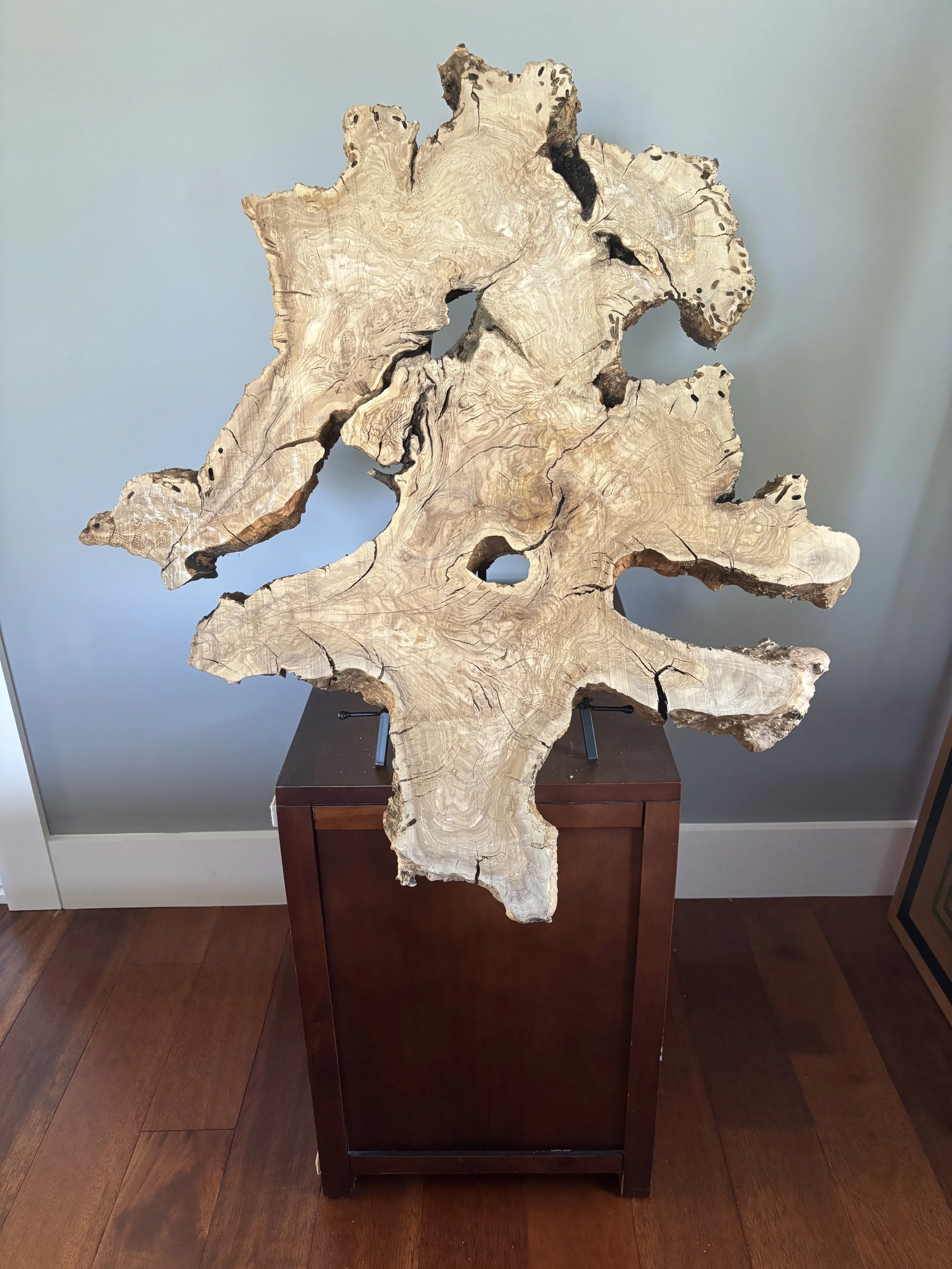 Image 6 of 6