Image 1 of 5
Image 2 of 5
Image 3 of 5
Image 4 of 5
Image 5 of 5
Regenerative
Eucalyptus burl and stainless steel.
13 lbs. 34 “ x 10” x 3”
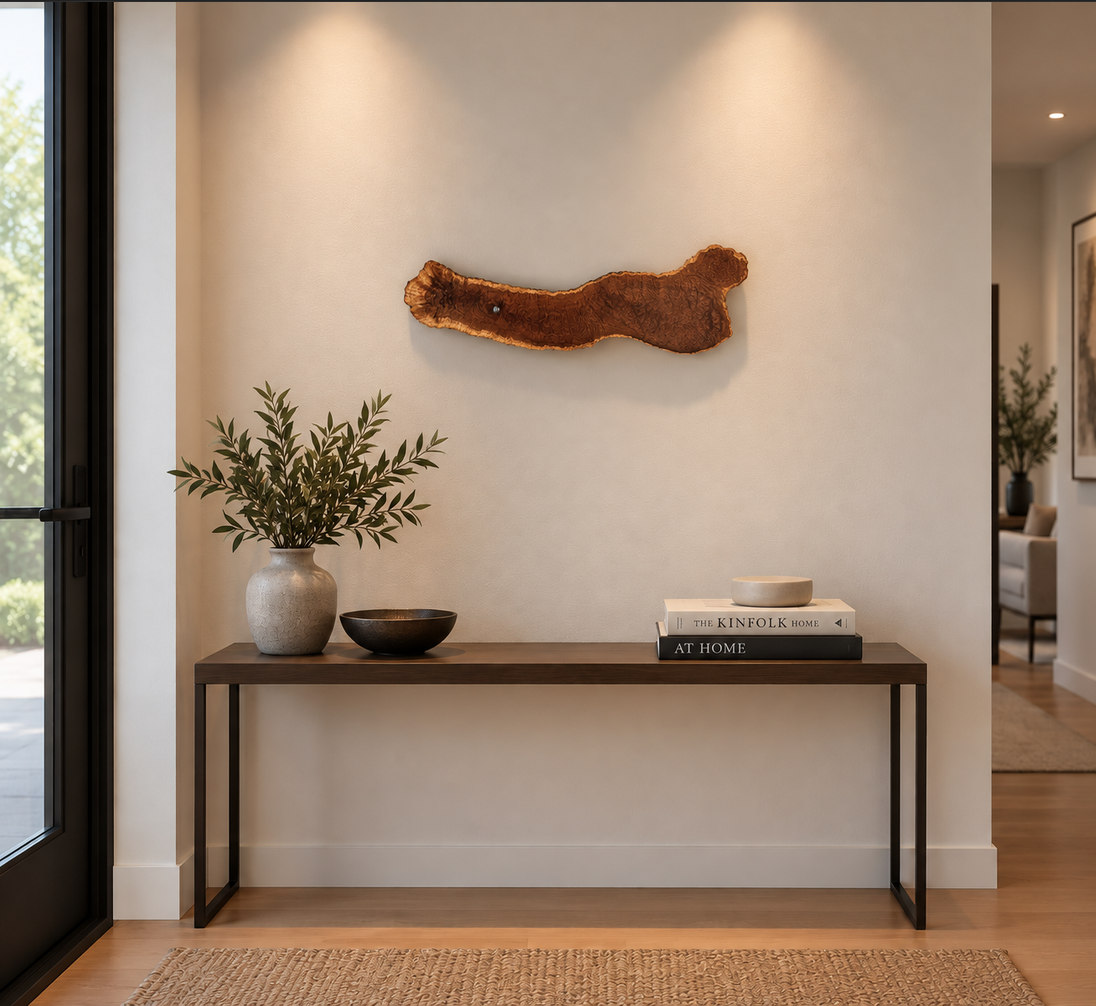
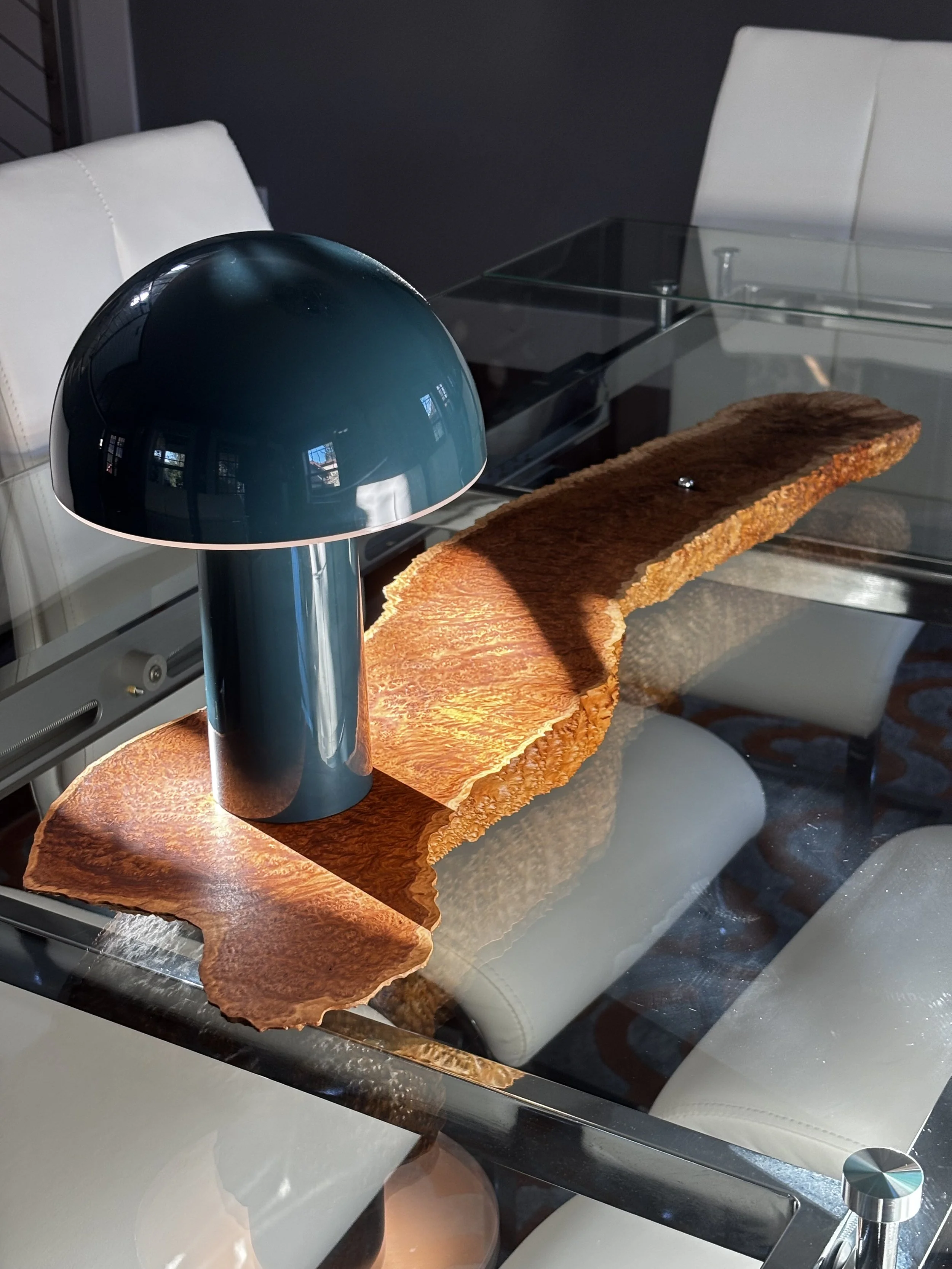
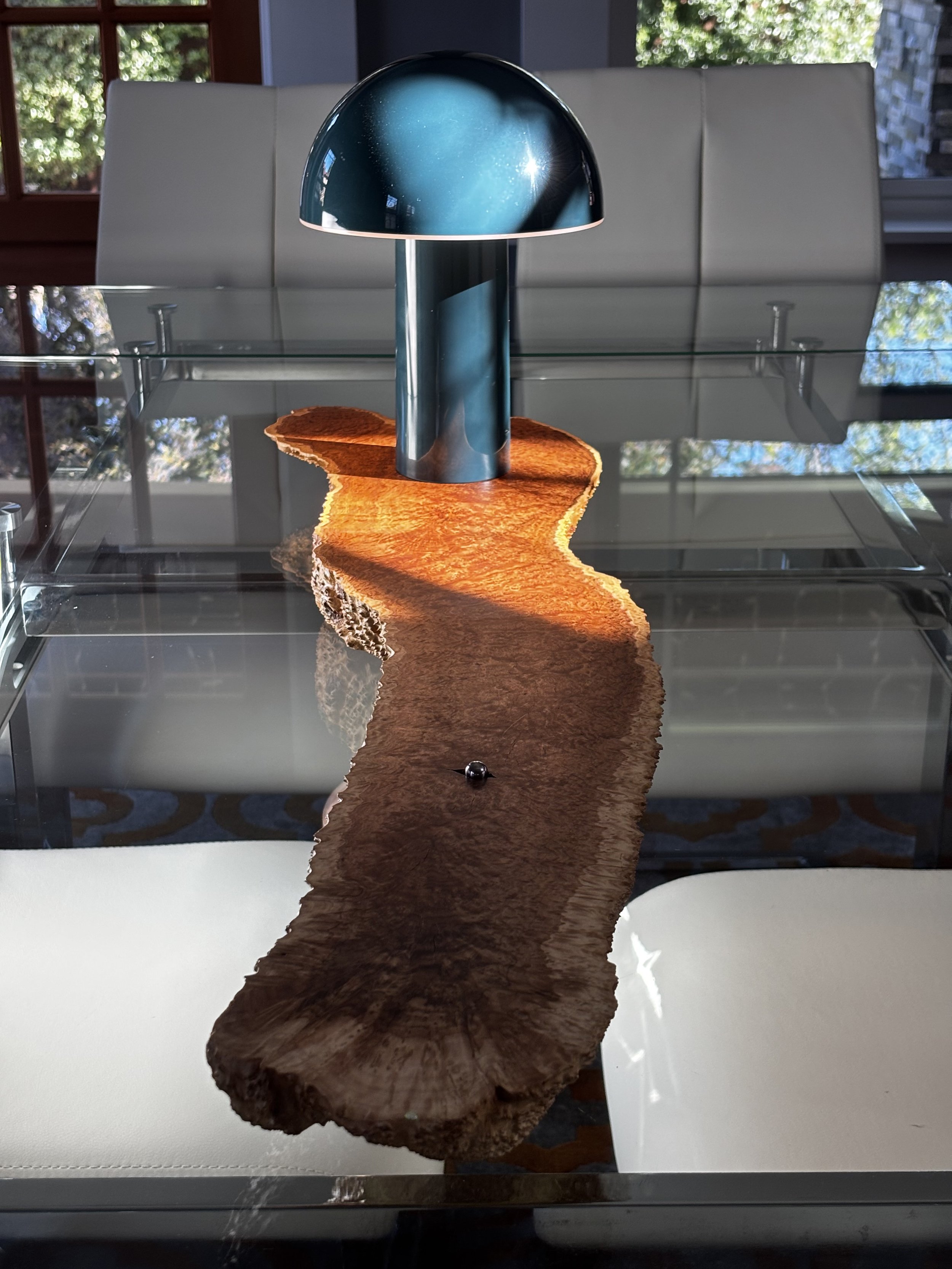
This sculpture takes its form from planaria—organisms known for their ability to regenerate, to reconstitute themselves after division or injury. The elongated eucalyptus body echoes that primitive geometry: simple, directional, and persistent.
The wood represents the organic continuum—living matter defined by adaptation, memory, and repair. Its grain carries evidence of stress and recovery, shaped over time rather than engineered toward symmetry. A single metal sphere rests within a natural void where an eye might be expected. It does not symbolize sight as anatomy. Instead, it marks identity emerging within regeneration—the moment where renewal does not merely repeat the past, but introduces something fixed, directional, and irreversible. Steel appears here as inevitability. Unlike the wood, it does not heal or change. Its presence establishes orientation, awareness, and consequence. Regeneration continues around it, but never without reference to it.
Regenerative is not about perfect renewal. It is about the tension between growth and fixation—between the body’s capacity to rebuild and the singular points that anchor identity forward.
Eucalyptus burl and stainless steel.
13 lbs. 34 “ x 10” x 3”
This sculpture takes its form from planaria—organisms known for their ability to regenerate, to reconstitute themselves after division or injury. The elongated eucalyptus body echoes that primitive geometry: simple, directional, and persistent.
The wood represents the organic continuum—living matter defined by adaptation, memory, and repair. Its grain carries evidence of stress and recovery, shaped over time rather than engineered toward symmetry. A single metal sphere rests within a natural void where an eye might be expected. It does not symbolize sight as anatomy. Instead, it marks identity emerging within regeneration—the moment where renewal does not merely repeat the past, but introduces something fixed, directional, and irreversible. Steel appears here as inevitability. Unlike the wood, it does not heal or change. Its presence establishes orientation, awareness, and consequence. Regeneration continues around it, but never without reference to it.
Regenerative is not about perfect renewal. It is about the tension between growth and fixation—between the body’s capacity to rebuild and the singular points that anchor identity forward.