Twilight of the Mind

$0.00

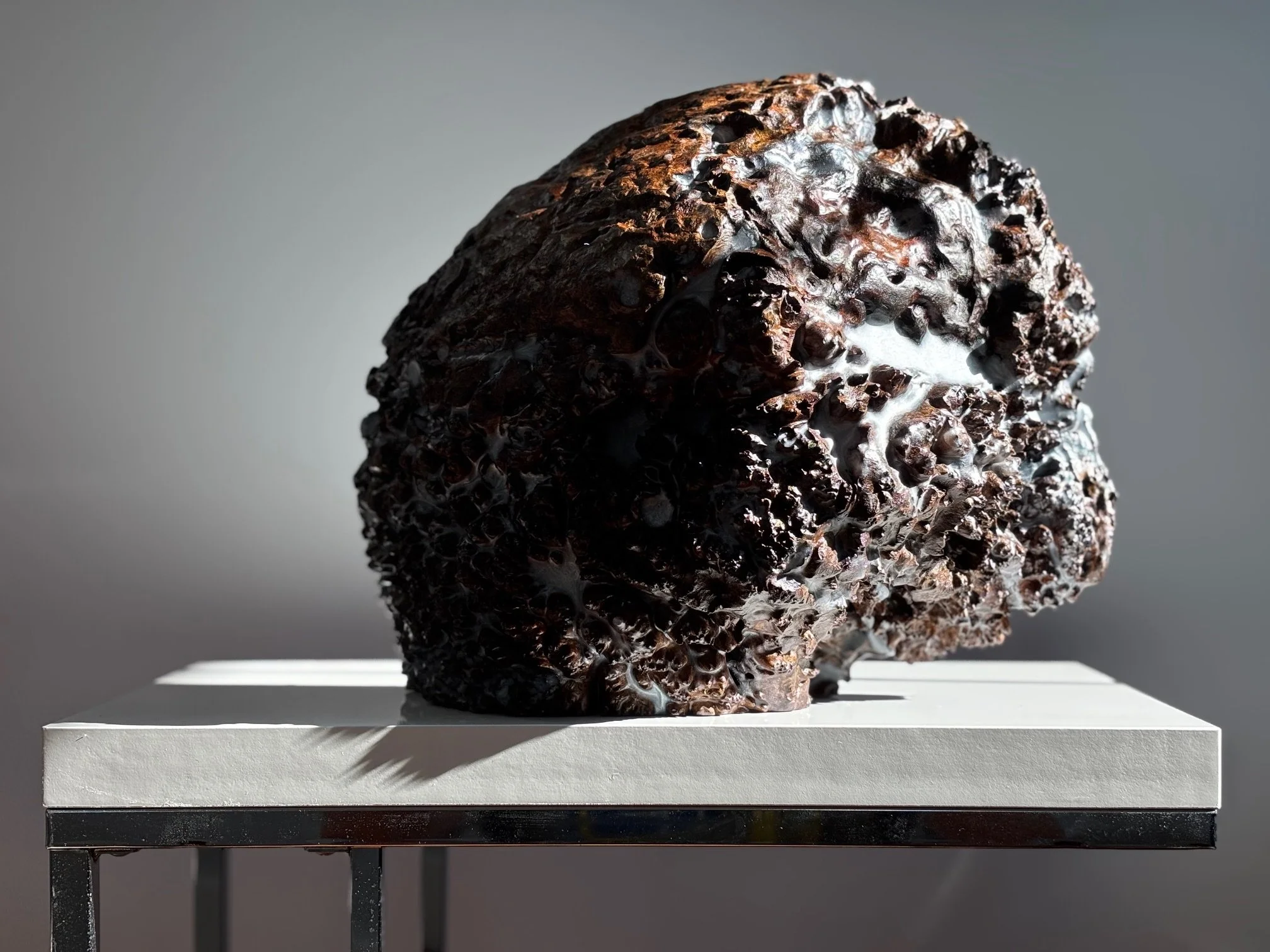
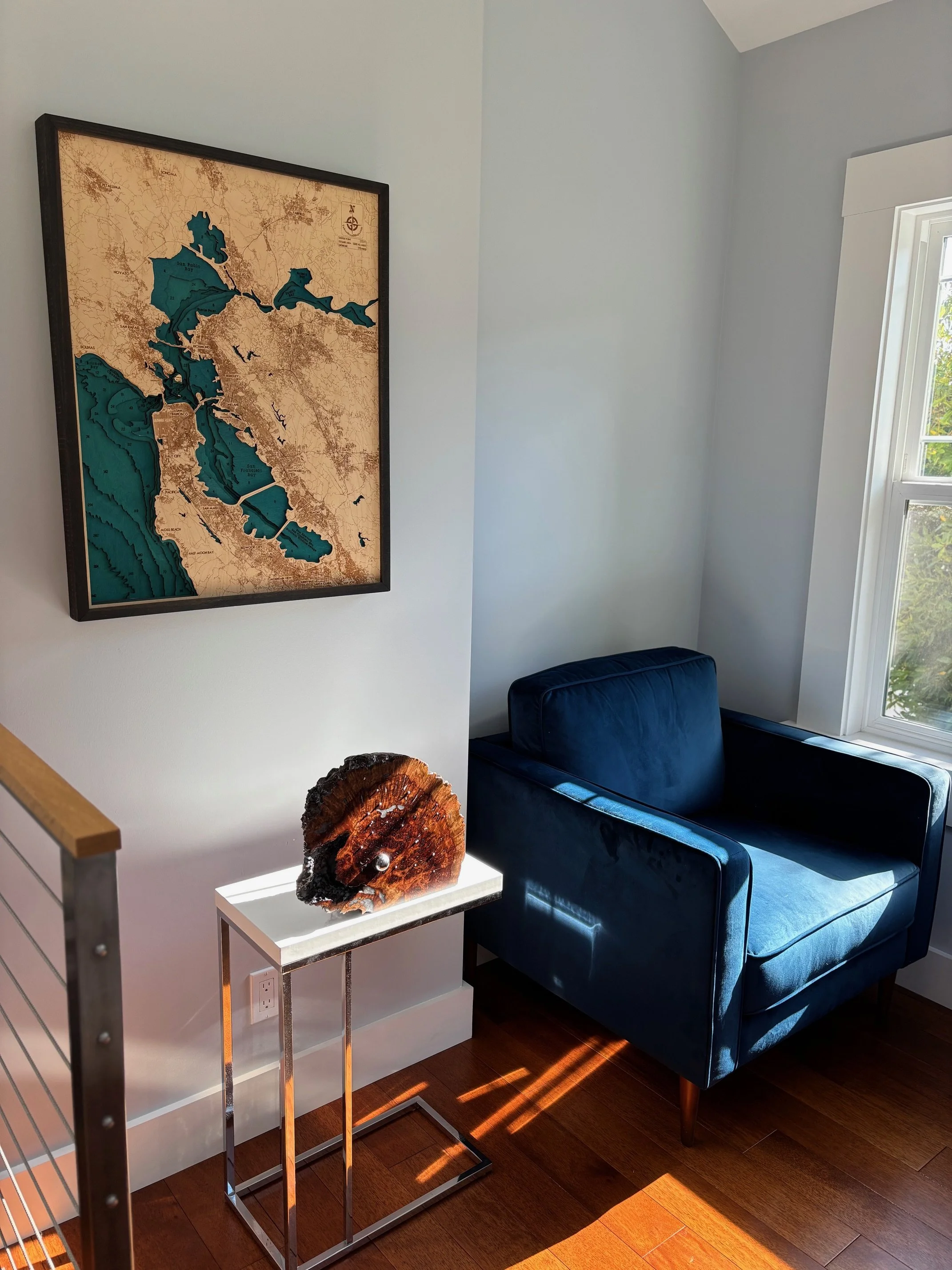
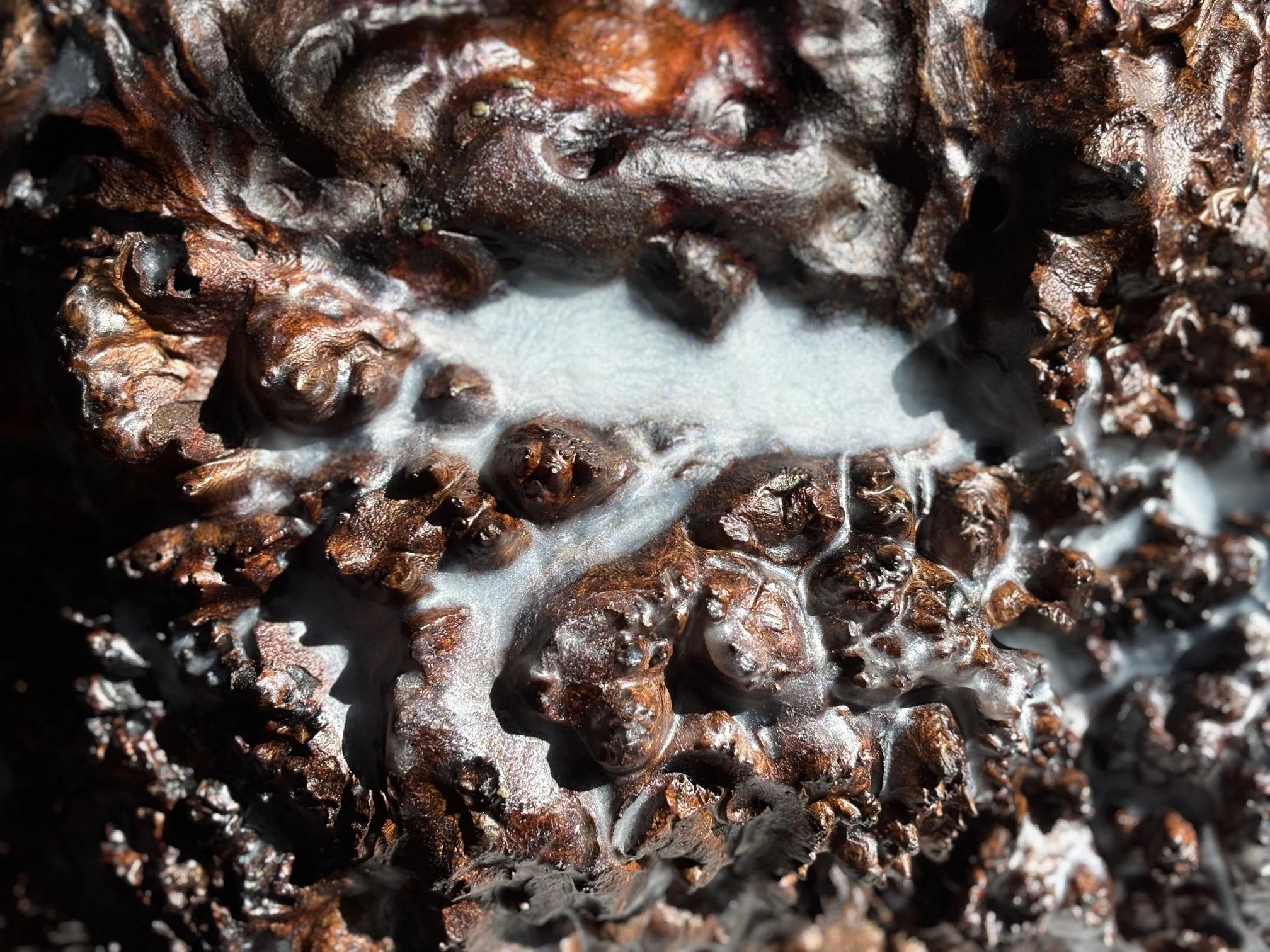
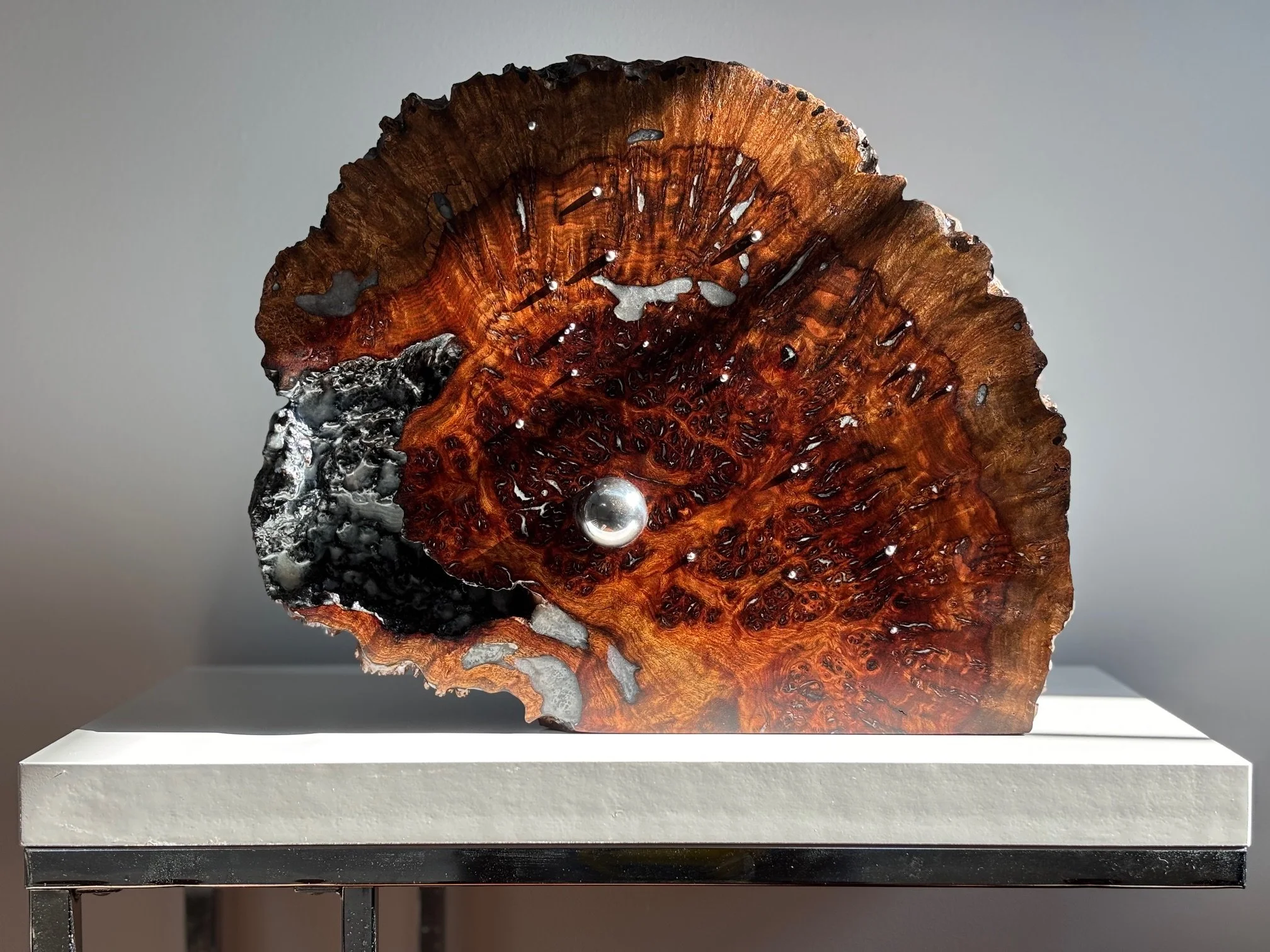
Chechen Burl Cap (Metopium brownei) with stainless steel and epoxy inlays.

12 lbs. 14” x 11” x 6”

Every spark of thought is a synapse—brief, charged, and alive in its moment. Across the brain’s intricate networks, these sparks give rise to memory, identity, perception, and awareness. Over time, the mind does not simply diminish; it changes. Neural pathways are revised by age and experience, and what was once immediate may become more selective, distilled, and resonant.

Twilight of the Mind reflects this condition. Its surface suggests a cortex shaped by time—folded, weathered, and deeply inscribed by experience rather than merely worn by loss. Embedded metallic spheres punctuate the terrain as mnemonic markers: luminous points of memory that continue to endure even as the surrounding field becomes more complex and uneven. Polished and reflective, they gather the present into themselves, joining observer and recollection in a single moment of recognition.

The work approaches cognitive aging not only as decline, but as transformation. Memory does not disappear all at once; it shifts in texture, concentrating around certain people, sensations, and emotionally charged fragments. What remains can carry unusual clarity and force. In that sense, the mind becomes less a continuous stream than a constellation—discrete points of significance held within a changing field.

Twilight of the Mind is therefore not solely a meditation on loss, but on endurance: on the persistence of identity in altered form, and on the quiet radiance of what the mind continues to hold.

https://www.nytimes.com/2026/05/07/science/dementia-memory-brain-injury.html

Chechen Burl Cap (Metopium brownei) with stainless steel and epoxy inlays.

12 lbs. 14” x 11” x 6”

Every spark of thought is a synapse—brief, charged, and alive in its moment. Across the brain’s intricate networks, these sparks give rise to memory, identity, perception, and awareness. Over time, the mind does not simply diminish; it changes. Neural pathways are revised by age and experience, and what was once immediate may become more selective, distilled, and resonant.

Twilight of the Mind reflects this condition. Its surface suggests a cortex shaped by time—folded, weathered, and deeply inscribed by experience rather than merely worn by loss. Embedded metallic spheres punctuate the terrain as mnemonic markers: luminous points of memory that continue to endure even as the surrounding field becomes more complex and uneven. Polished and reflective, they gather the present into themselves, joining observer and recollection in a single moment of recognition.

The work approaches cognitive aging not only as decline, but as transformation. Memory does not disappear all at once; it shifts in texture, concentrating around certain people, sensations, and emotionally charged fragments. What remains can carry unusual clarity and force. In that sense, the mind becomes less a continuous stream than a constellation—discrete points of significance held within a changing field.

Twilight of the Mind is therefore not solely a meditation on loss, but on endurance: on the persistence of identity in altered form, and on the quiet radiance of what the mind continues to hold.

https://www.nytimes.com/2026/05/07/science/dementia-memory-brain-injury.html