Image 1 of 3
Image 2 of 3
Image 3 of 3
Calculi (SOLD)
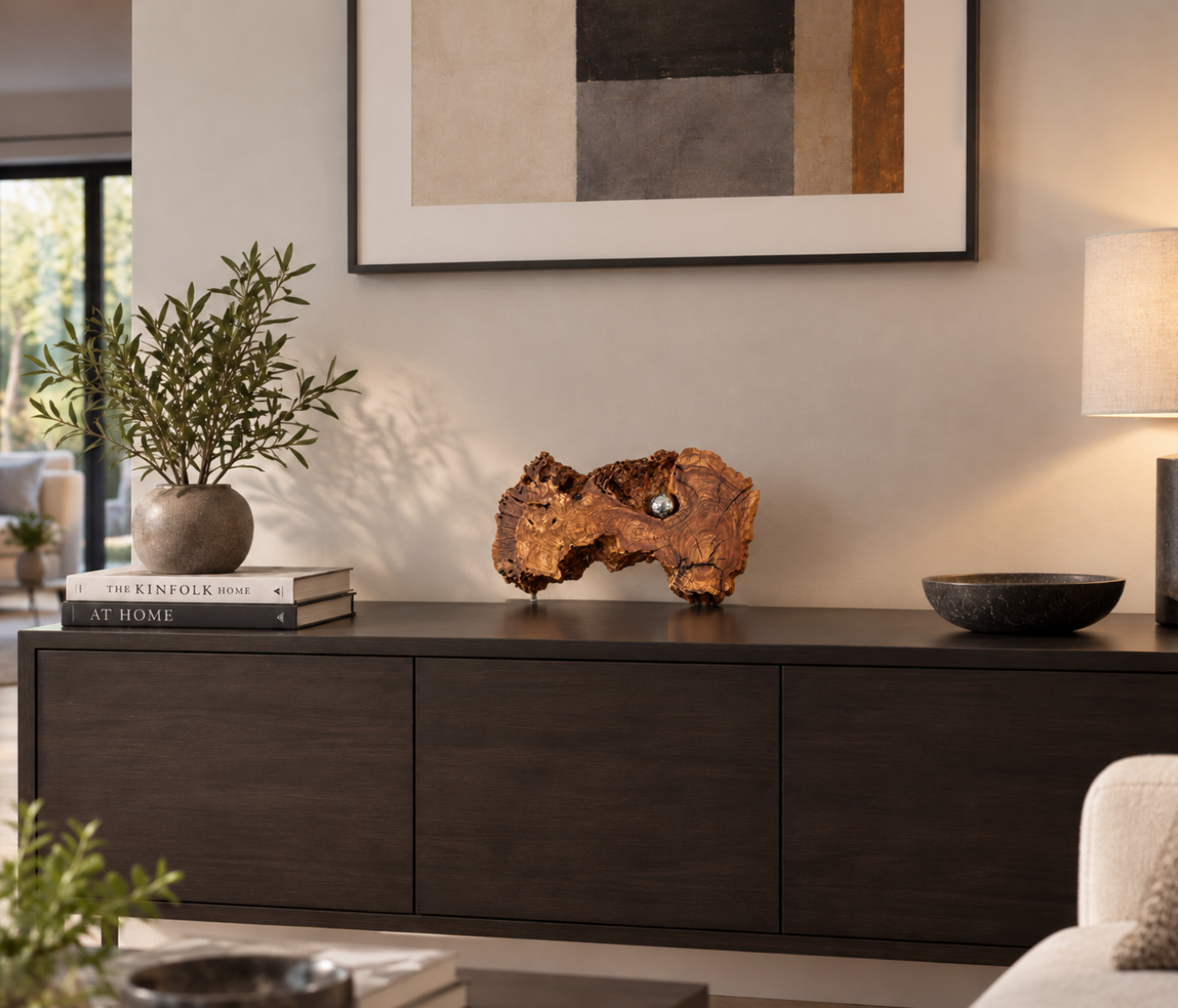
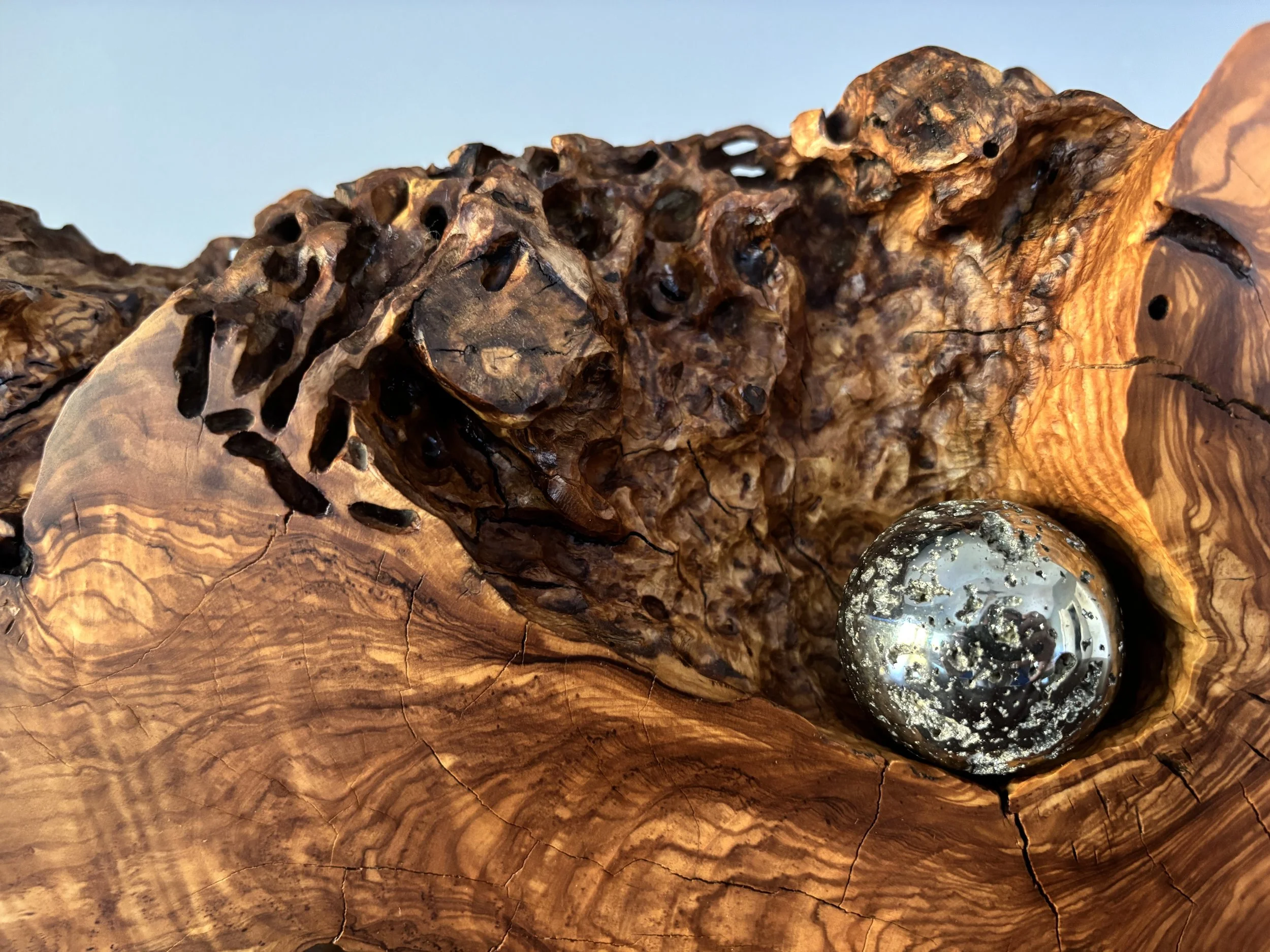
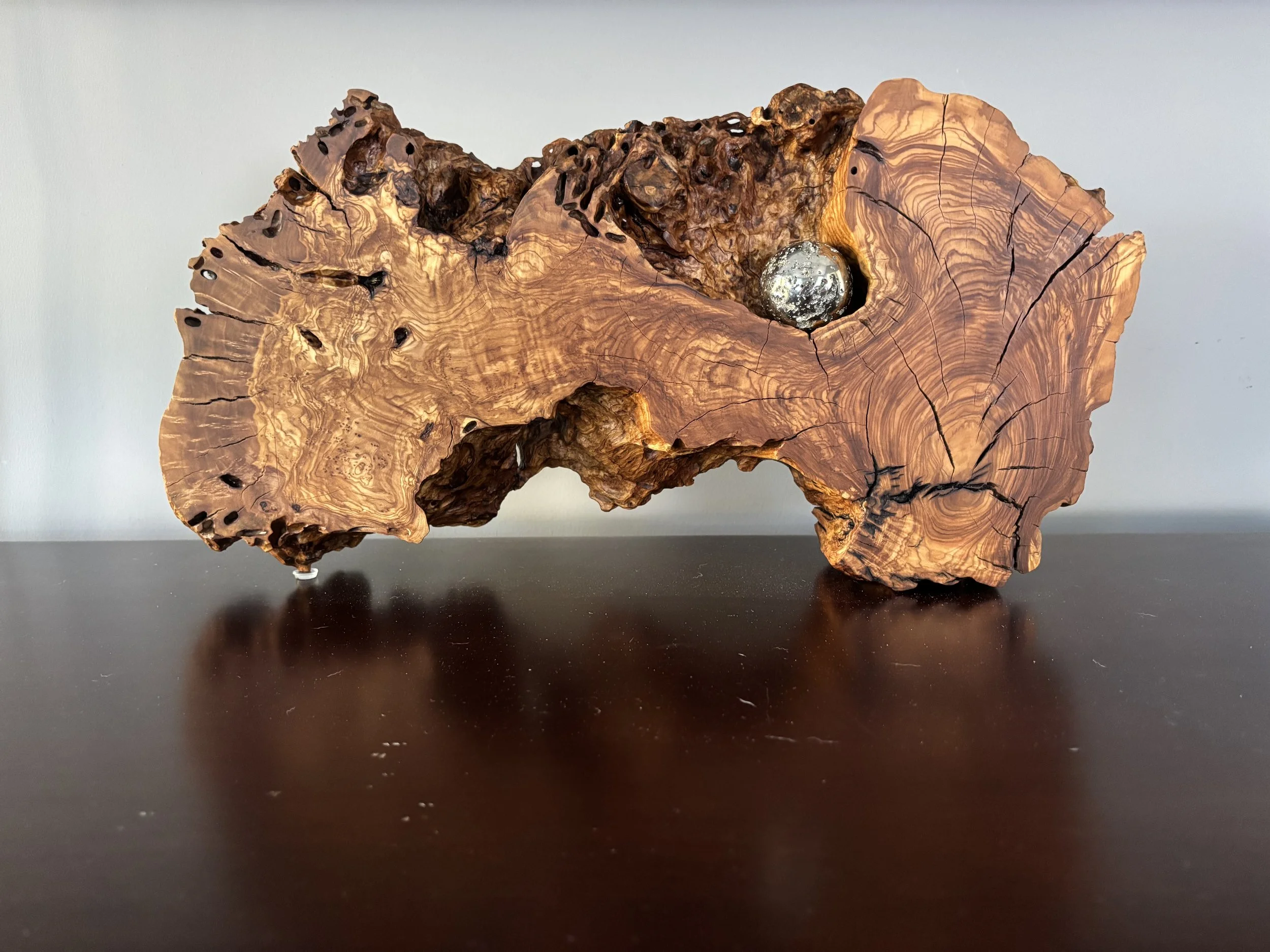
Olive wood (Olea europaea) with pyrite.
11 lbs. 20” x 12” x 3”
This sculpture takes its form from the human kidney—an organ shaped by flow, filtration, and quiet labor. The olive wood burl resembles that anatomy not through precision, but through resemblance earned by growth: asymmetrical, dense, and marked by time.
The wood represents the organic system in motion—adaptive, responsive, and designed to process imbalance rather than eliminate it outright. Its grain traces pathways of passage and resistance, recording where material has moved, slowed, or gathered. Embedded within this body are metallic spheres. The largest occupies a dominant cavity, representing a fully formed stone—an inevitability that has crossed from condition into consequence. Smaller spheres surround it as precursors: early accumulations, pressures not yet resolved, futures quietly forming. The steel does not stand in for biology. It stands in opposition to it. Uniform, unyielding, and indifferent to flow, the metal marks the point where a living system’s capacity to manage disruption has been exceeded. The wood bends and accommodates; the steel remains fixed.
Calculi is not about pathology alone. It is about accumulation—how small, tolerable imbalances can harden over time into something immovable. It reflects the tension between systems built to adapt and the forces that eventually refuse to dissolve.
Olive wood (Olea europaea) with pyrite.
11 lbs. 20” x 12” x 3”
This sculpture takes its form from the human kidney—an organ shaped by flow, filtration, and quiet labor. The olive wood burl resembles that anatomy not through precision, but through resemblance earned by growth: asymmetrical, dense, and marked by time.
The wood represents the organic system in motion—adaptive, responsive, and designed to process imbalance rather than eliminate it outright. Its grain traces pathways of passage and resistance, recording where material has moved, slowed, or gathered. Embedded within this body are metallic spheres. The largest occupies a dominant cavity, representing a fully formed stone—an inevitability that has crossed from condition into consequence. Smaller spheres surround it as precursors: early accumulations, pressures not yet resolved, futures quietly forming. The steel does not stand in for biology. It stands in opposition to it. Uniform, unyielding, and indifferent to flow, the metal marks the point where a living system’s capacity to manage disruption has been exceeded. The wood bends and accommodates; the steel remains fixed.
Calculi is not about pathology alone. It is about accumulation—how small, tolerable imbalances can harden over time into something immovable. It reflects the tension between systems built to adapt and the forces that eventually refuse to dissolve.