
 Image 1 of 4
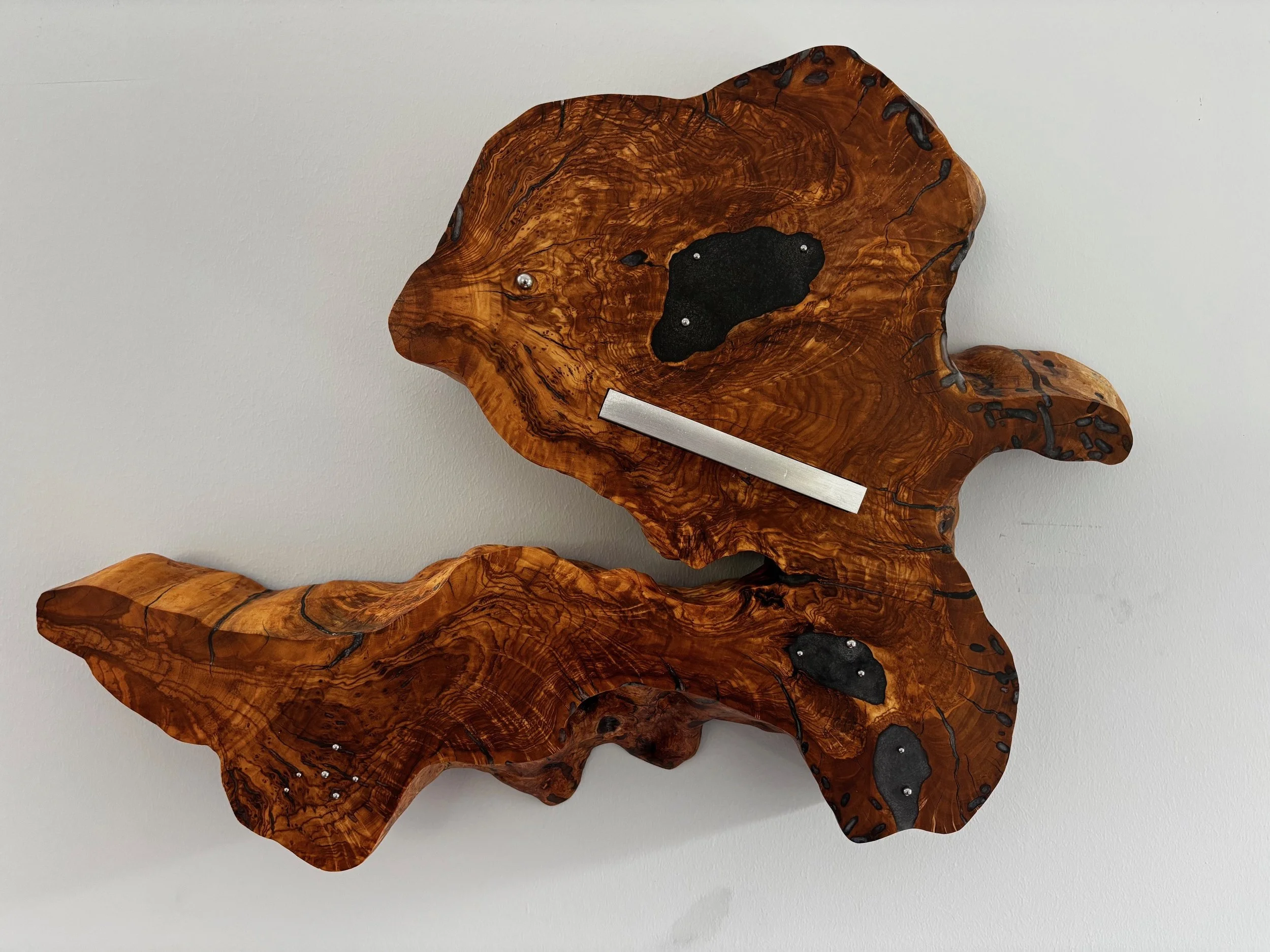 Image 2 of 4
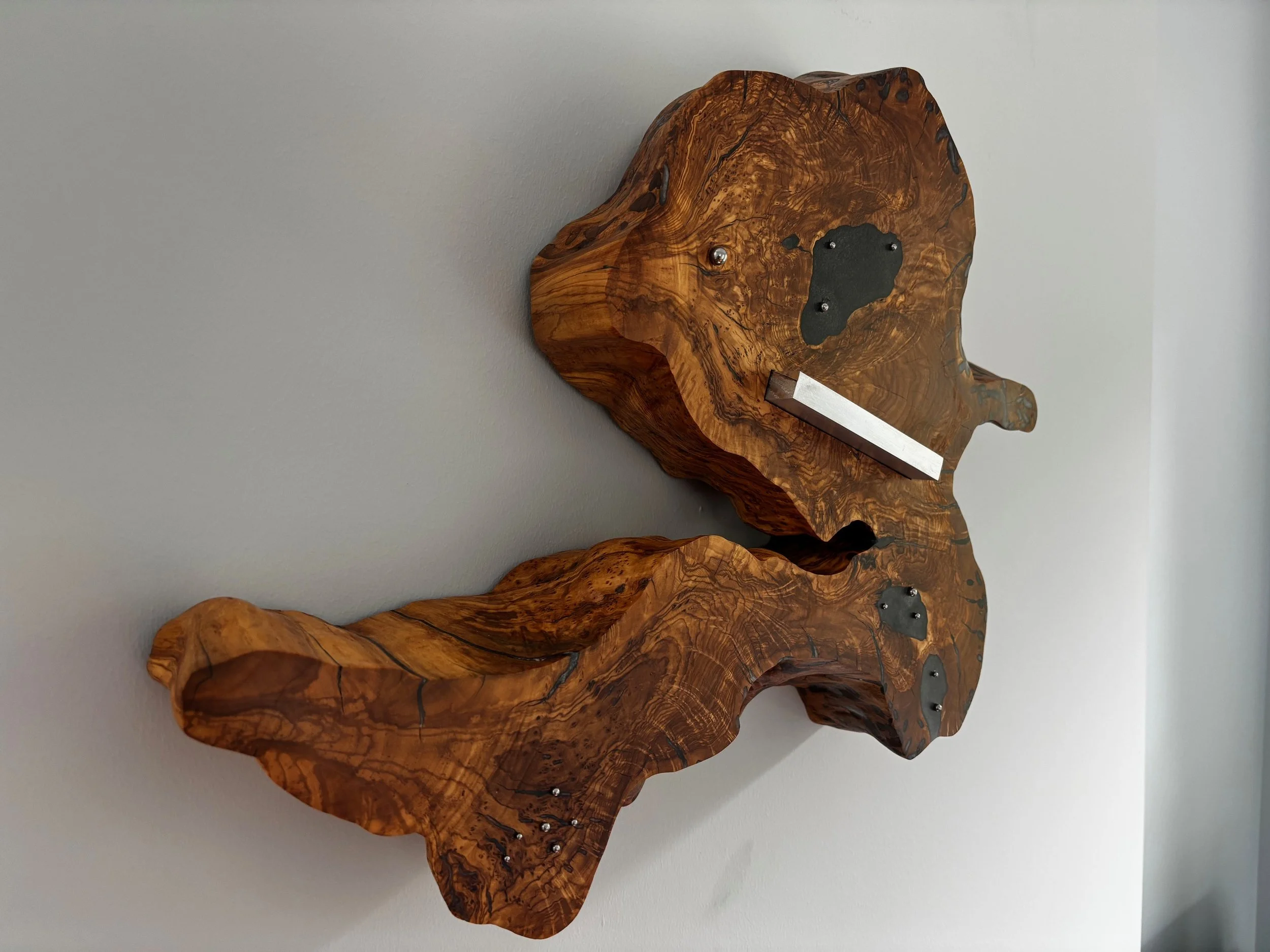 Image 3 of 4
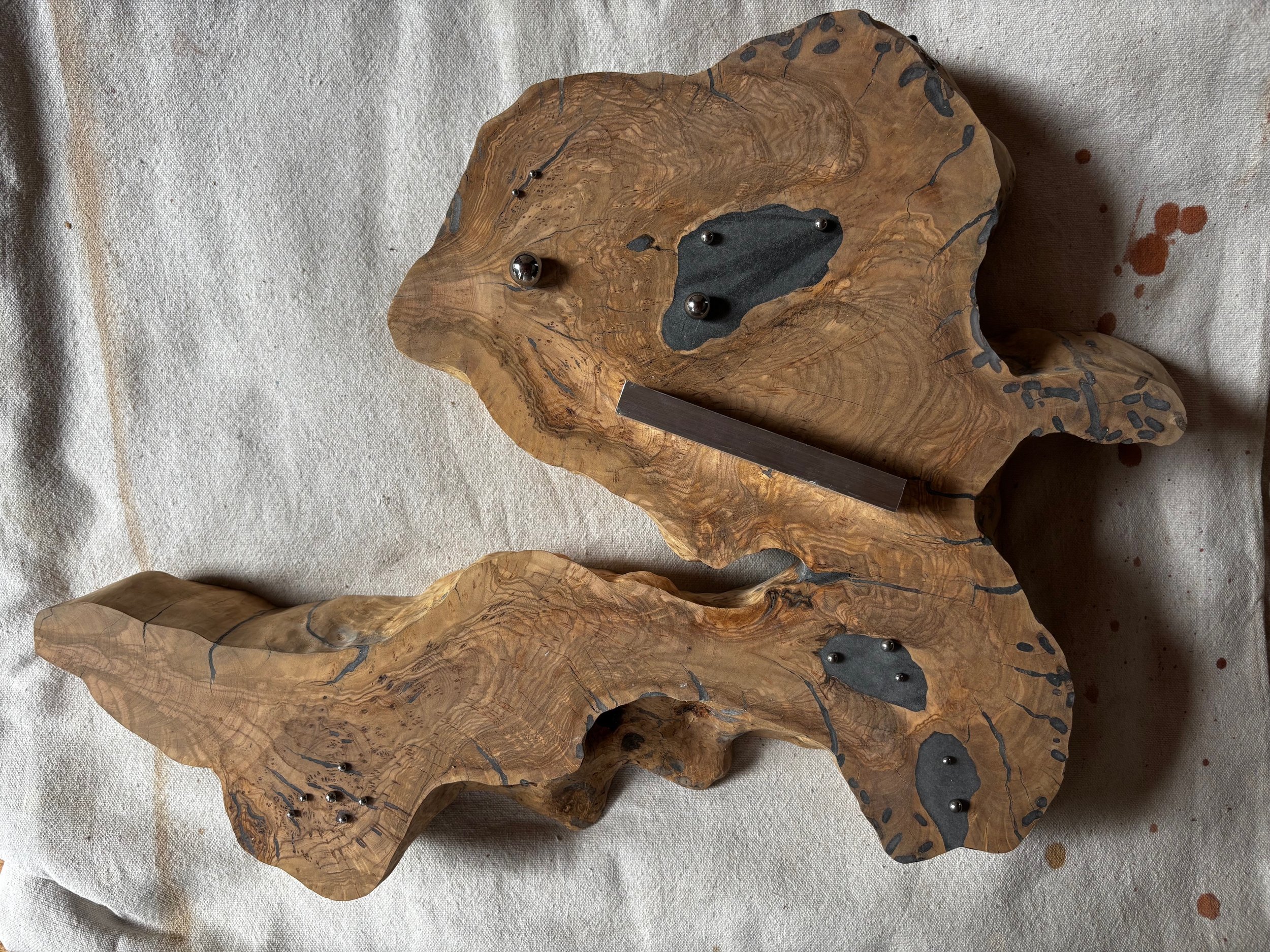 Image 4 of 4
Olive wood (Olea europaea) with stainless steel and epoxy inlays.
14 lbs. 23” x 18” x 3”
November Sky begins as a record of atmospheric unrest. The olive wood slab retains an irregular perimeter and a grain structure marked by turbulence, compression, and drift. Its broad mass gathers with the visual weight of a storm front—dense, uneven, and suspended. The surface reads like a weathered field of accumulation, carrying the evidence of duration, instability, and slow natural formation.
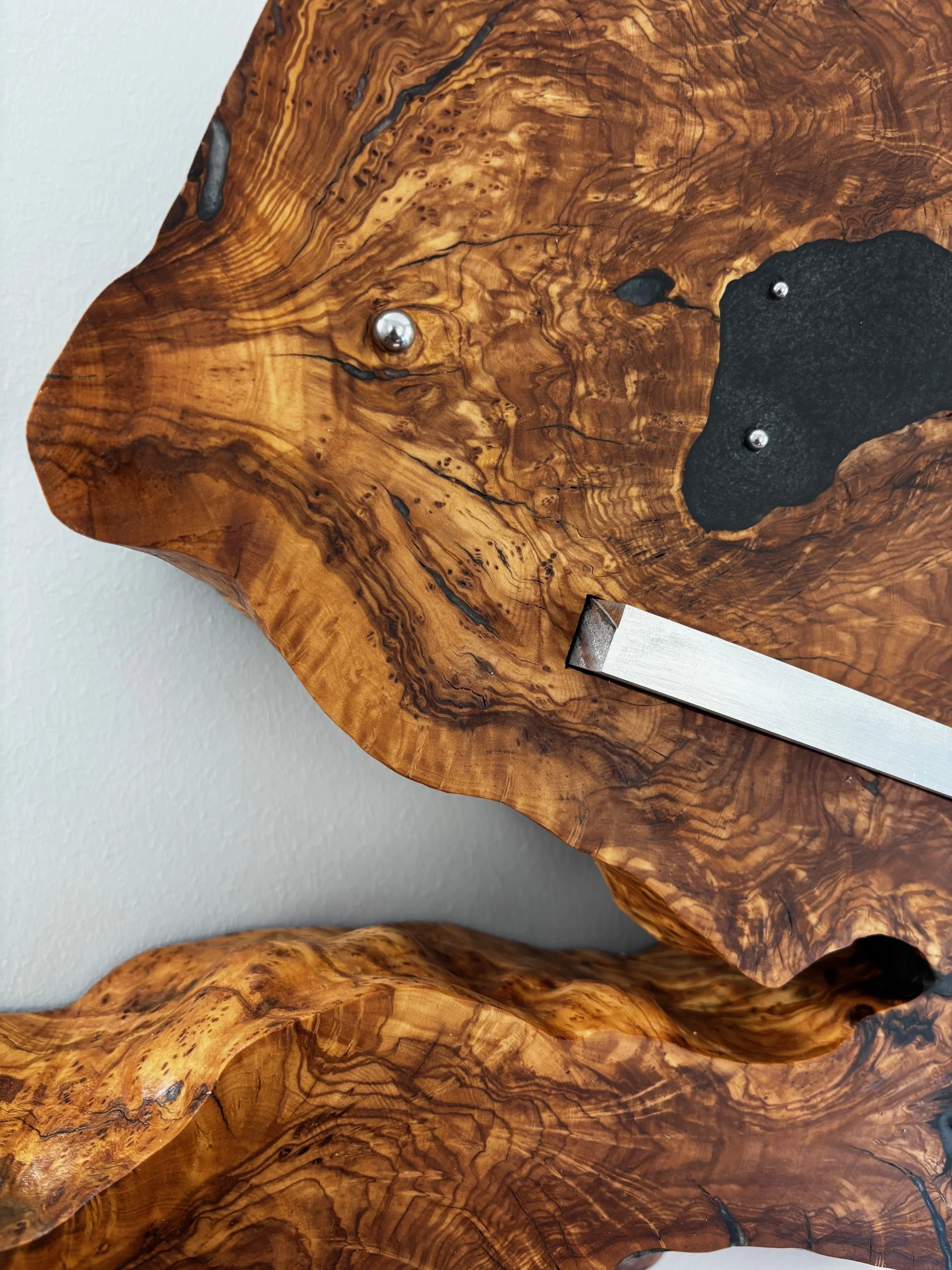
Inserted into that charged terrain are stainless steel spheres and a single rectilinear element of aluminum. The spheres appear as concentrated points of pressure or condensation—localized intensities distributed across the surface like suspended droplets, hail cores, or pockets of electrical buildup. Their reflective surfaces catch and disperse light, giving them the character of meteorological events made momentarily visible within a larger atmospheric system.
The aluminum bar reads unmistakably as a bolt of lightning. Its rectilinear form cuts through the composition with the force of a sudden electrical discharge: sharp, linear, and immediate against the wood’s slower, more diffuse movements. Unlike the spheres, which suggest accumulation and suspension, the bar signifies release. It is the flash event within the storm field—the instant when latent energy resolves into a visible strike.
What emerges is less a static composition than an atmospheric event: a study in buildup, disturbance, and release, where the sky’s instability is translated into material form.
Olive wood (Olea europaea) with stainless steel and epoxy inlays.
14 lbs. 23” x 18” x 3”
November Sky begins as a record of atmospheric unrest. The olive wood slab retains an irregular perimeter and a grain structure marked by turbulence, compression, and drift. Its broad mass gathers with the visual weight of a storm front—dense, uneven, and suspended. The surface reads like a weathered field of accumulation, carrying the evidence of duration, instability, and slow natural formation.
Inserted into that charged terrain are stainless steel spheres and a single rectilinear element of aluminum. The spheres appear as concentrated points of pressure or condensation—localized intensities distributed across the surface like suspended droplets, hail cores, or pockets of electrical buildup. Their reflective surfaces catch and disperse light, giving them the character of meteorological events made momentarily visible within a larger atmospheric system.
The aluminum bar reads unmistakably as a bolt of lightning. Its rectilinear form cuts through the composition with the force of a sudden electrical discharge: sharp, linear, and immediate against the wood’s slower, more diffuse movements. Unlike the spheres, which suggest accumulation and suspension, the bar signifies release. It is the flash event within the storm field—the instant when latent energy resolves into a visible strike.
What emerges is less a static composition than an atmospheric event: a study in buildup, disturbance, and release, where the sky’s instability is translated into material form.