Olive wood (Olea europaea) with stainless steel and epoxy inlays.
15lbs. 24” x 16” x 3”
An elephant never forgets, but maybe it misremembers?
Carved from reclaimed olive wood, Vivid, but Untrue takes the suggestive form of an elephant head—a figure long associated with memory, permanence, and recall. Yet this sculpture turns that association against itself. Rather than presenting memory as stable or faithful, it reveals it as something contingent, revised, and often contradictory. The work was inspired in part by a recent real-life experience of the sculptor, in which a vividly remembered event gave way to uncertainty, contradiction, and the unsettling realization that clarity and accuracy are not always the same.
On one side, an irregular interior cavity resembling the elephant’s eye is rendered in blue, while a separate inclusion suggests a mouth containing food. On the reverse, that same eye-like cavity appears grey, and the food is absent. The general structure remains the same, but the image changes. What seems at first to be a single remembered event splits into two incompatible versions: each vivid, each convincing, neither fully reliable.
The work reflects on the instability of recollection—how memory does not simply preserve experience, but reconstructs it. Detail can sharpen even as truth recedes. In this way, Vivid, but Untrue suggests that what is most emotionally immediate is not always what is most accurate. The sculpture becomes a portrait not of forgetting, but of false certainty: the mind’s ability to produce competing realities from the same underlying form.
Olive wood (Olea europaea) with stainless steel and epoxy inlays.
15lbs. 24” x 16” x 3”
An elephant never forgets, but maybe it misremembers?
Carved from reclaimed olive wood, Vivid, but Untrue takes the suggestive form of an elephant head—a figure long associated with memory, permanence, and recall. Yet this sculpture turns that association against itself. Rather than presenting memory as stable or faithful, it reveals it as something contingent, revised, and often contradictory. The work was inspired in part by a recent real-life experience of the sculptor, in which a vividly remembered event gave way to uncertainty, contradiction, and the unsettling realization that clarity and accuracy are not always the same.
On one side, an irregular interior cavity resembling the elephant’s eye is rendered in blue, while a separate inclusion suggests a mouth containing food. On the reverse, that same eye-like cavity appears grey, and the food is absent. The general structure remains the same, but the image changes. What seems at first to be a single remembered event splits into two incompatible versions: each vivid, each convincing, neither fully reliable.
The work reflects on the instability of recollection—how memory does not simply preserve experience, but reconstructs it. Detail can sharpen even as truth recedes. In this way, Vivid, but Untrue suggests that what is most emotionally immediate is not always what is most accurate. The sculpture becomes a portrait not of forgetting, but of false certainty: the mind’s ability to produce competing realities from the same underlying form.

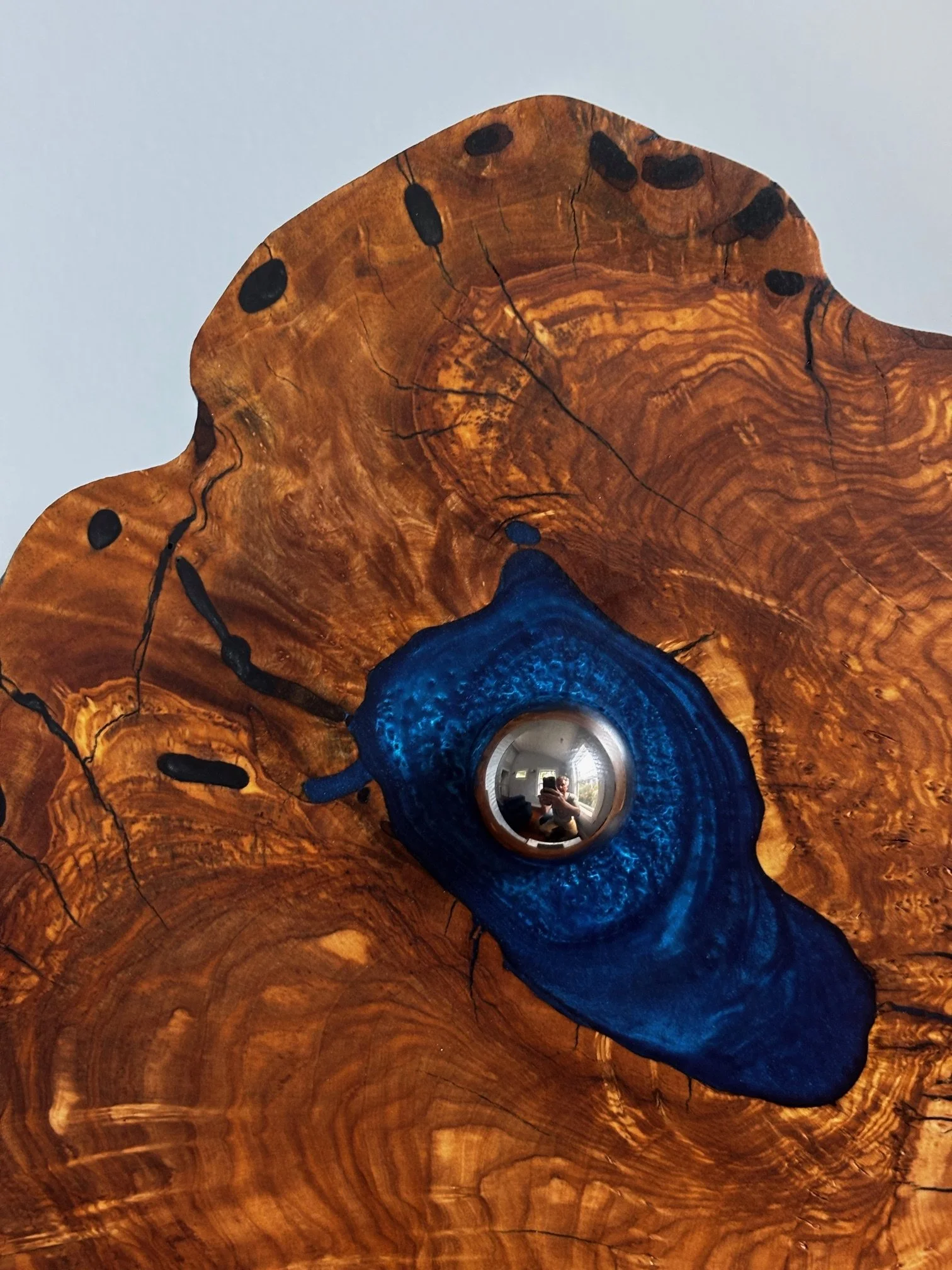 Image 1 of 9
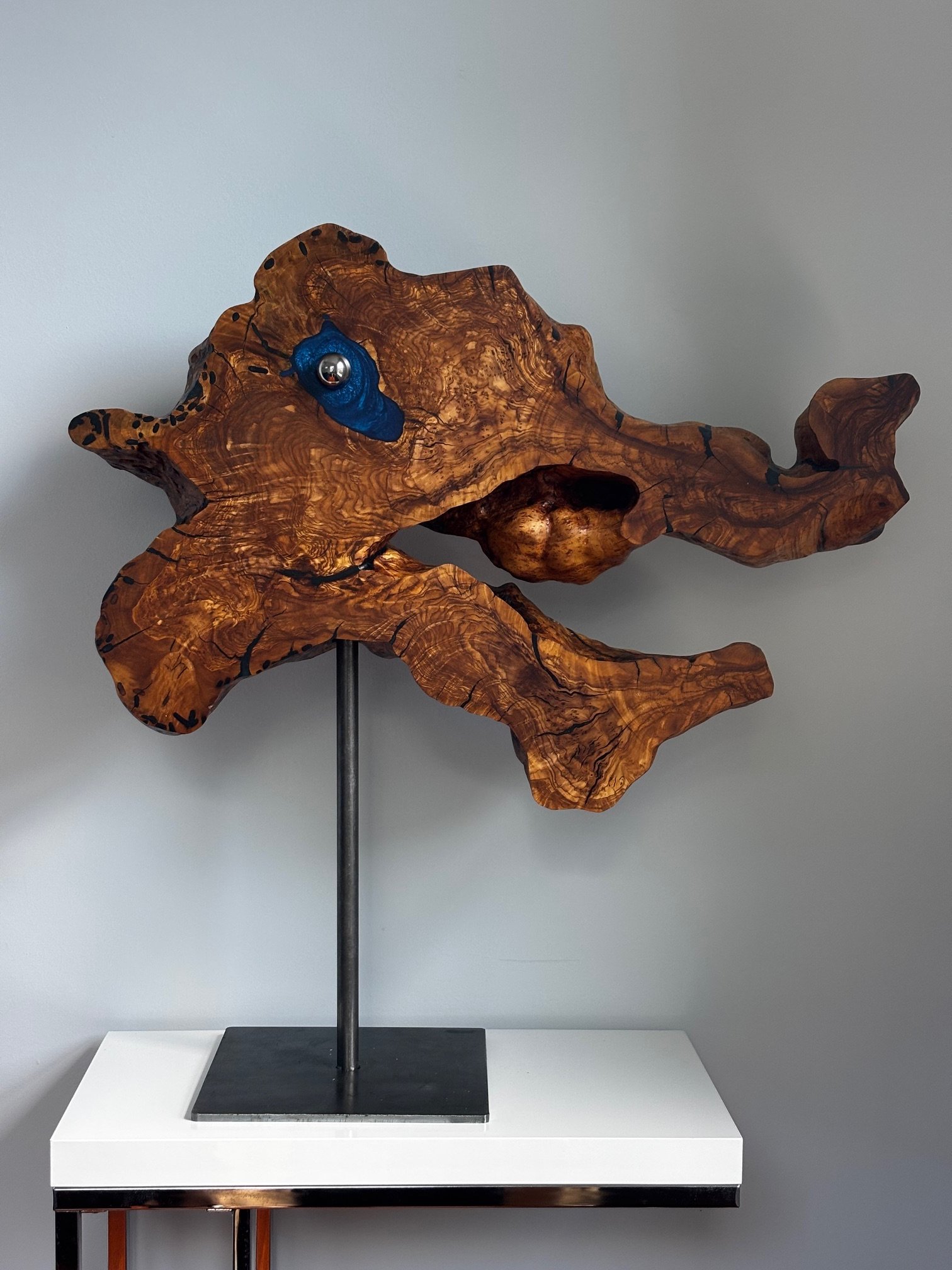 Image 2 of 9
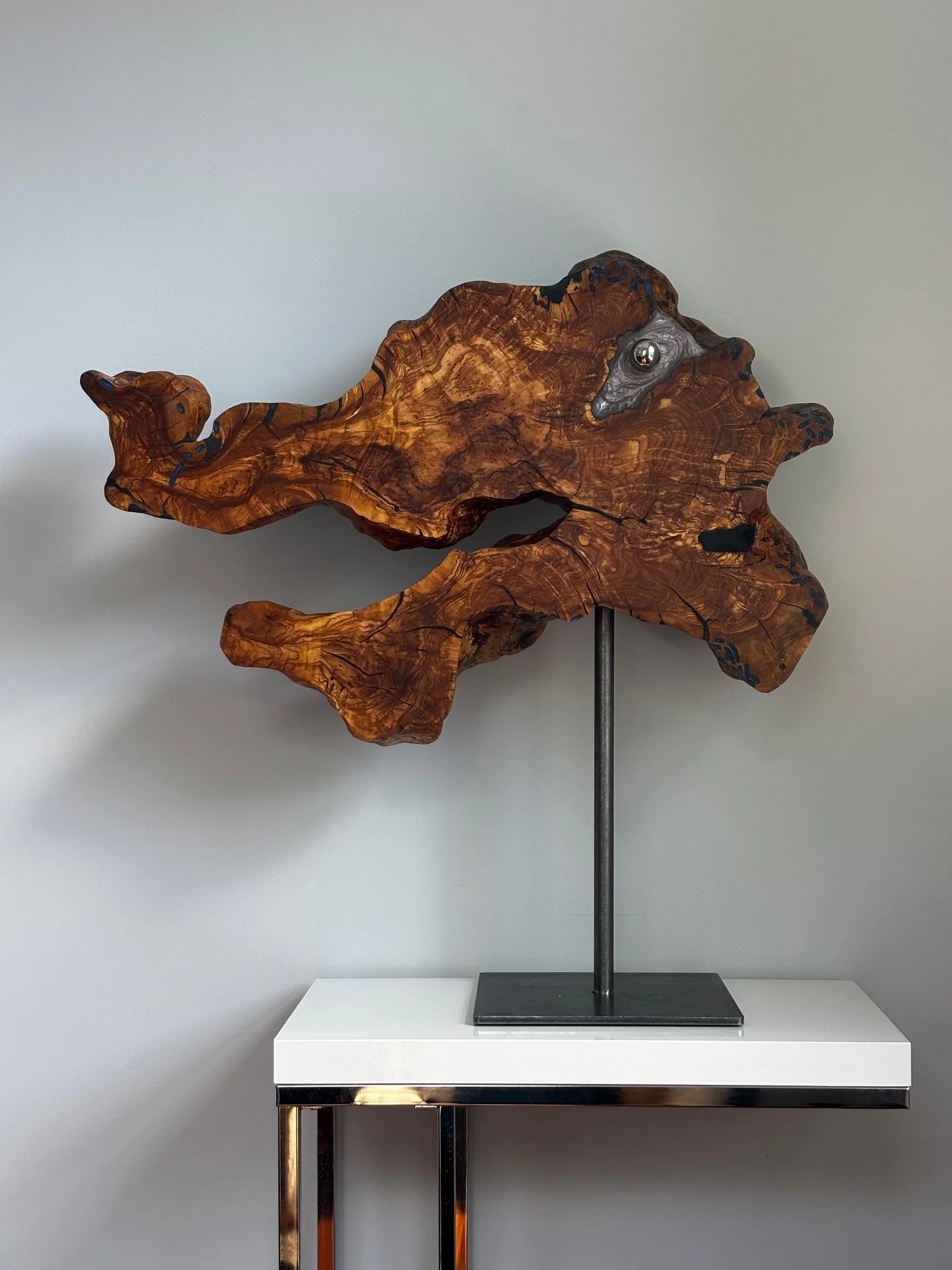 Image 3 of 9
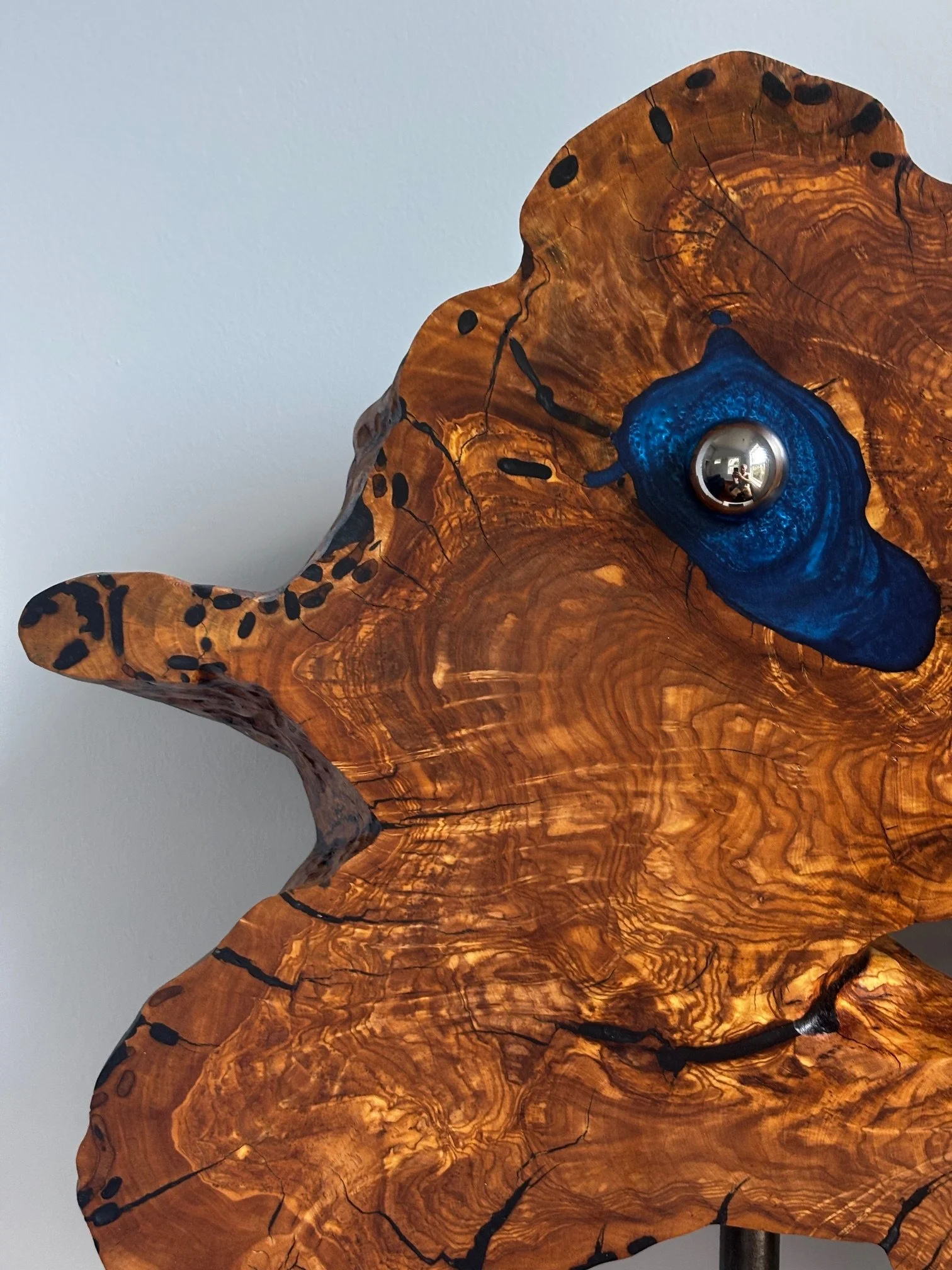 Image 4 of 9
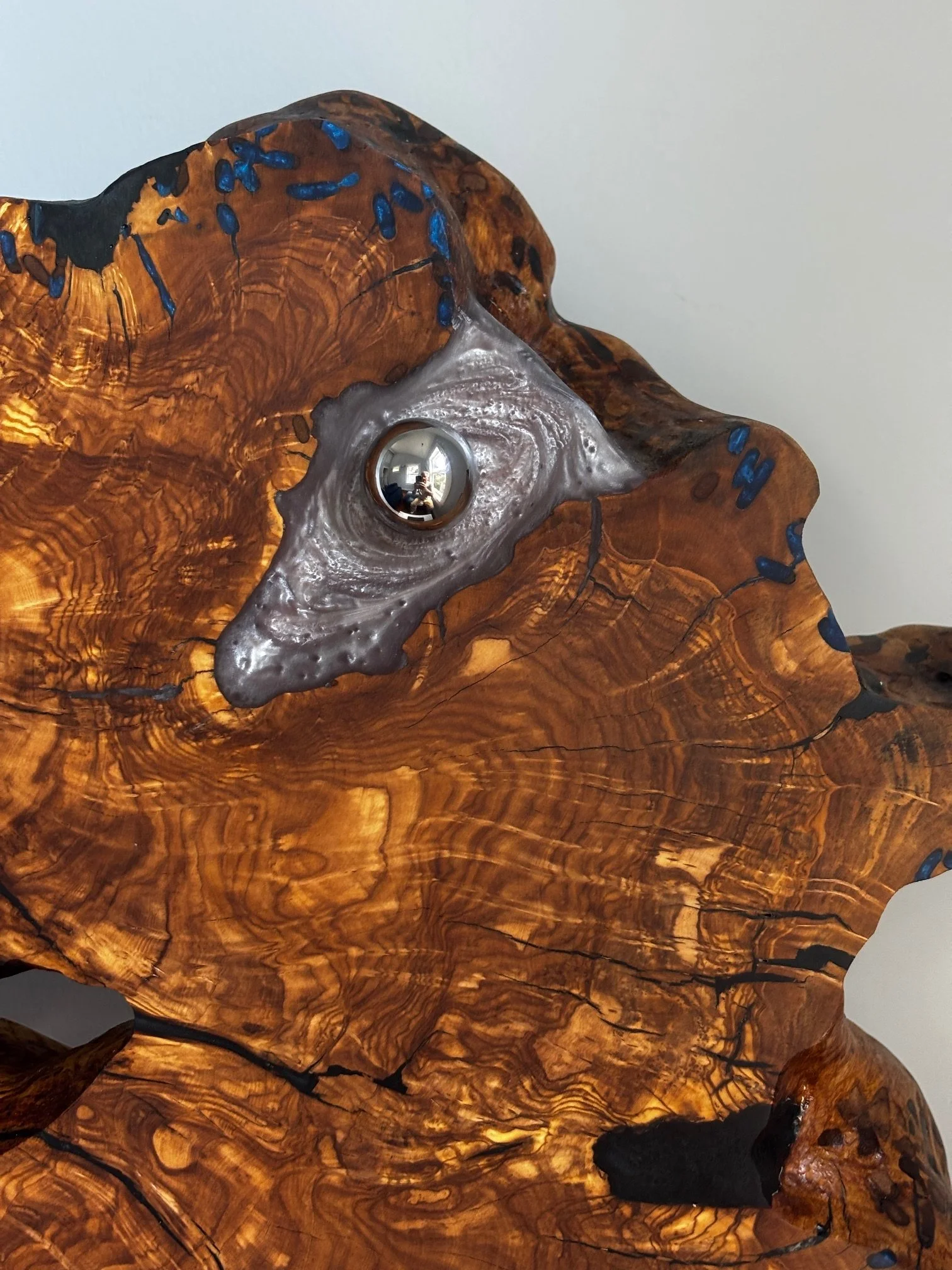 Image 5 of 9
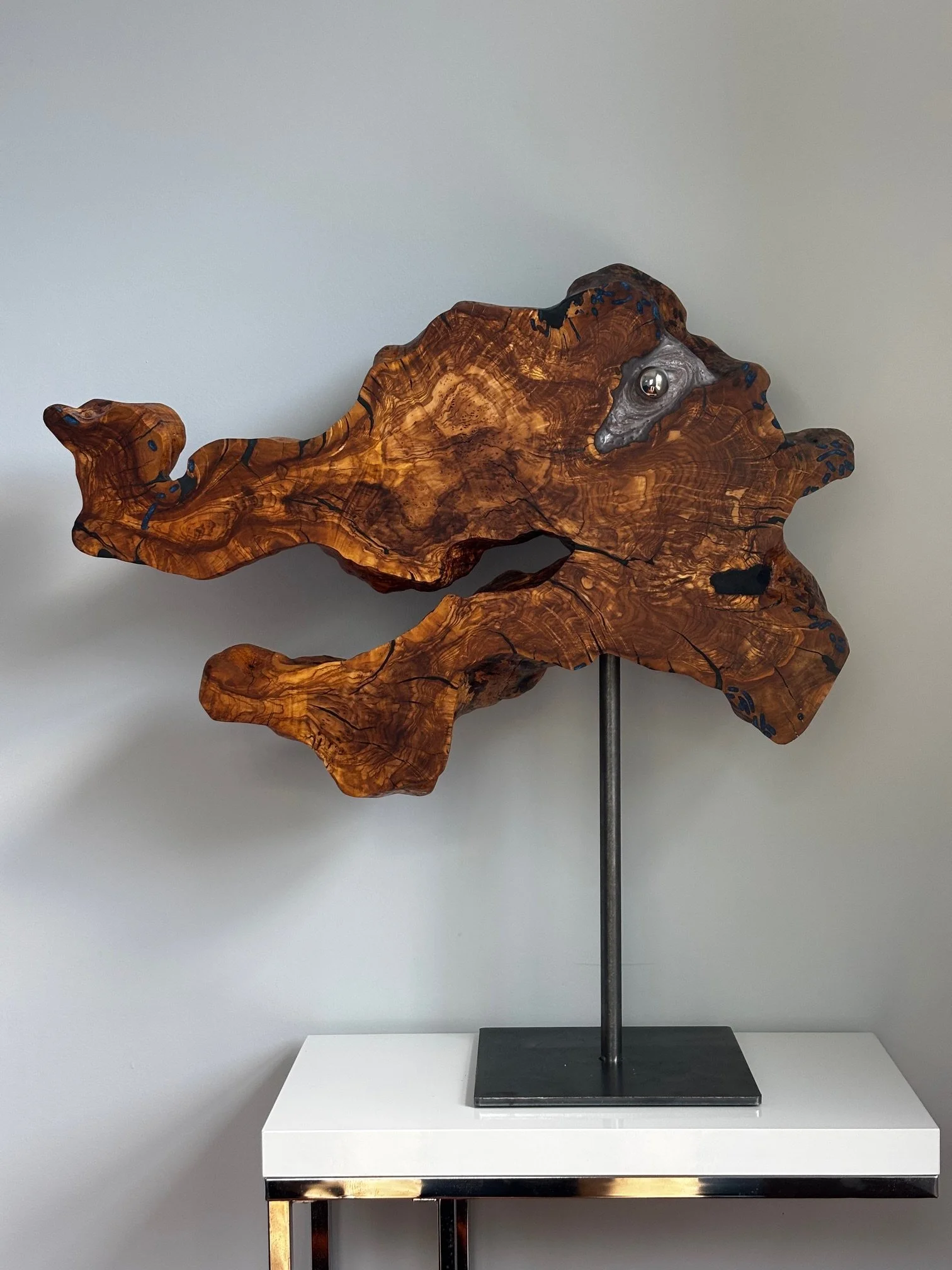 Image 6 of 9
 Image 7 of 9
 Image 8 of 9
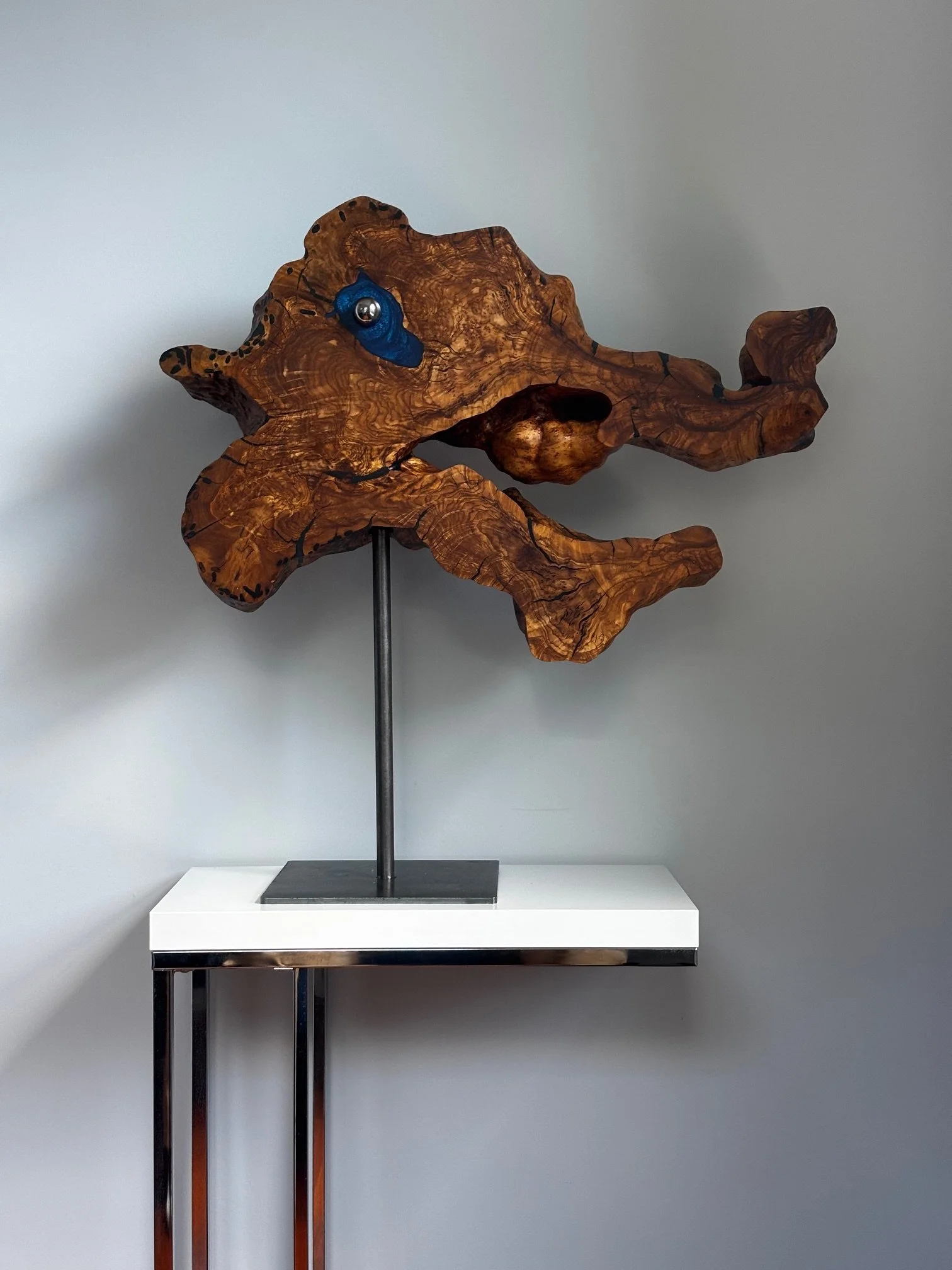 Image 9 of 9