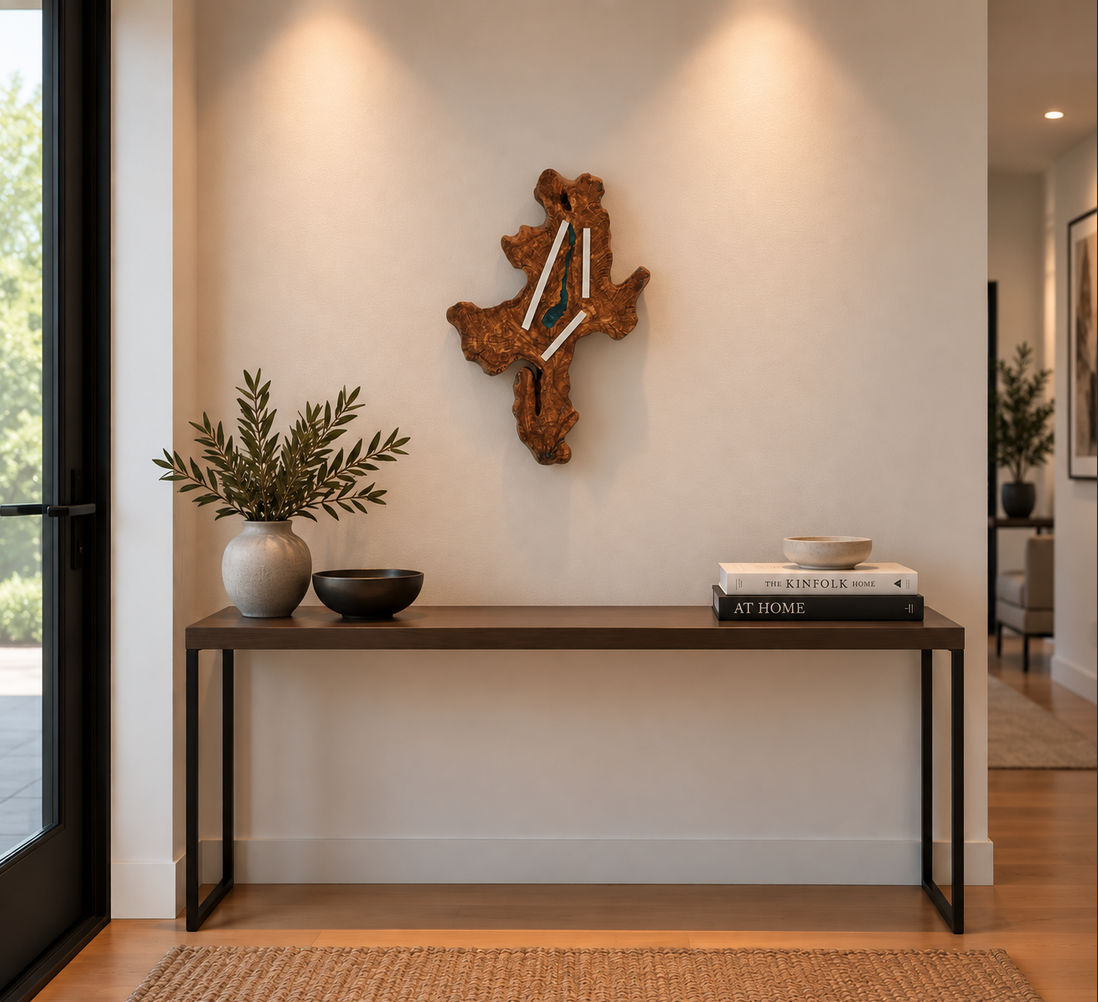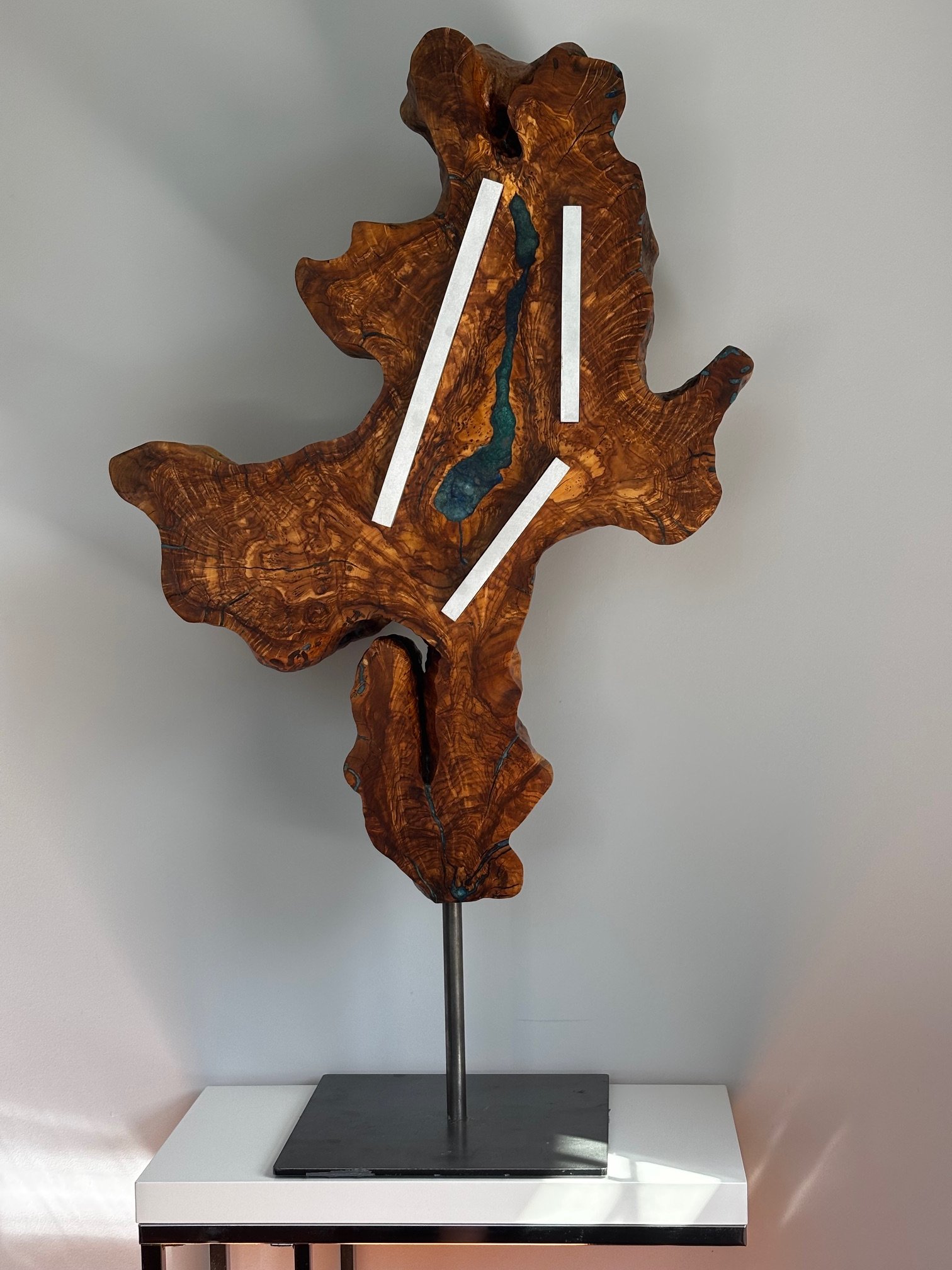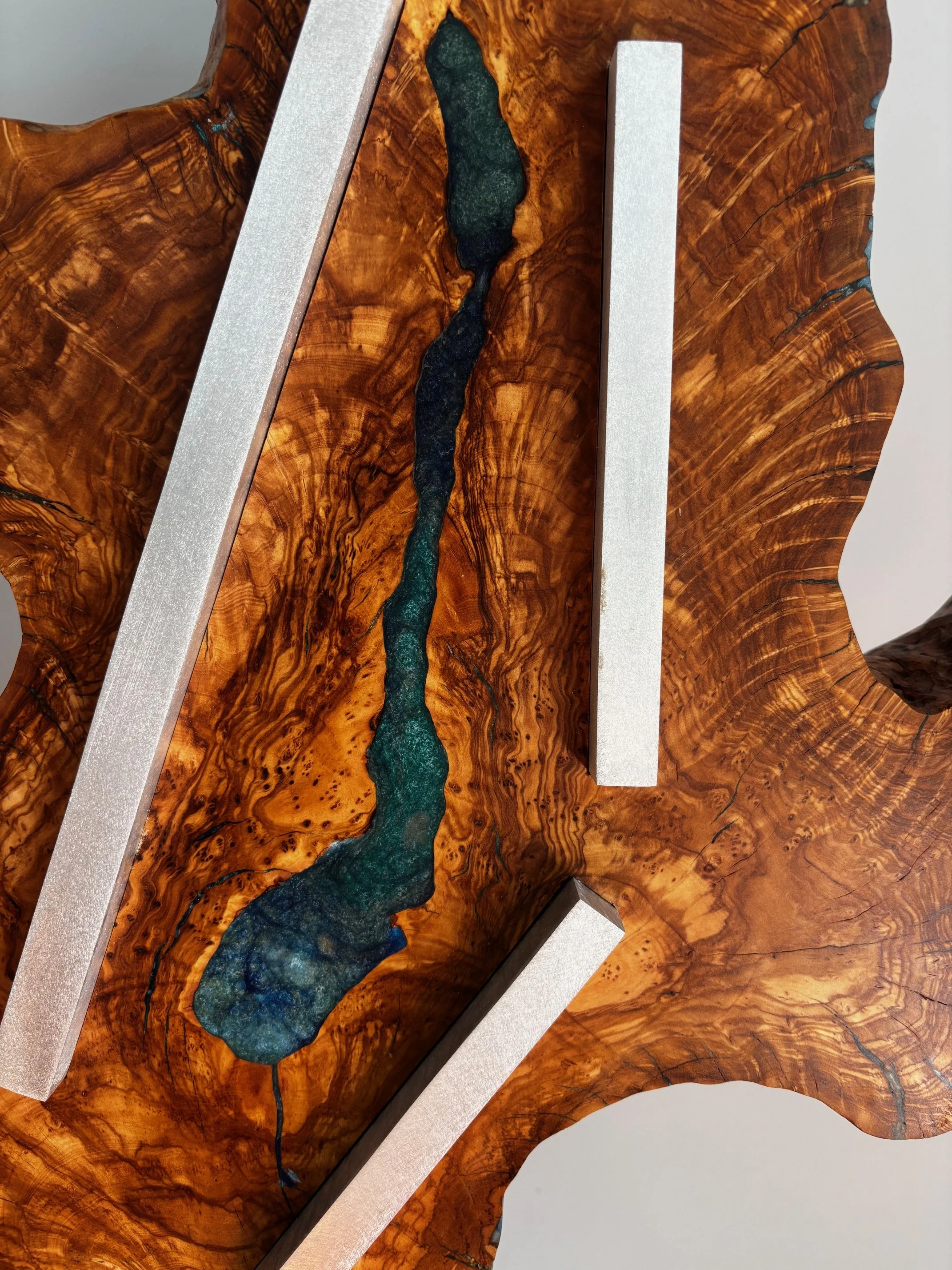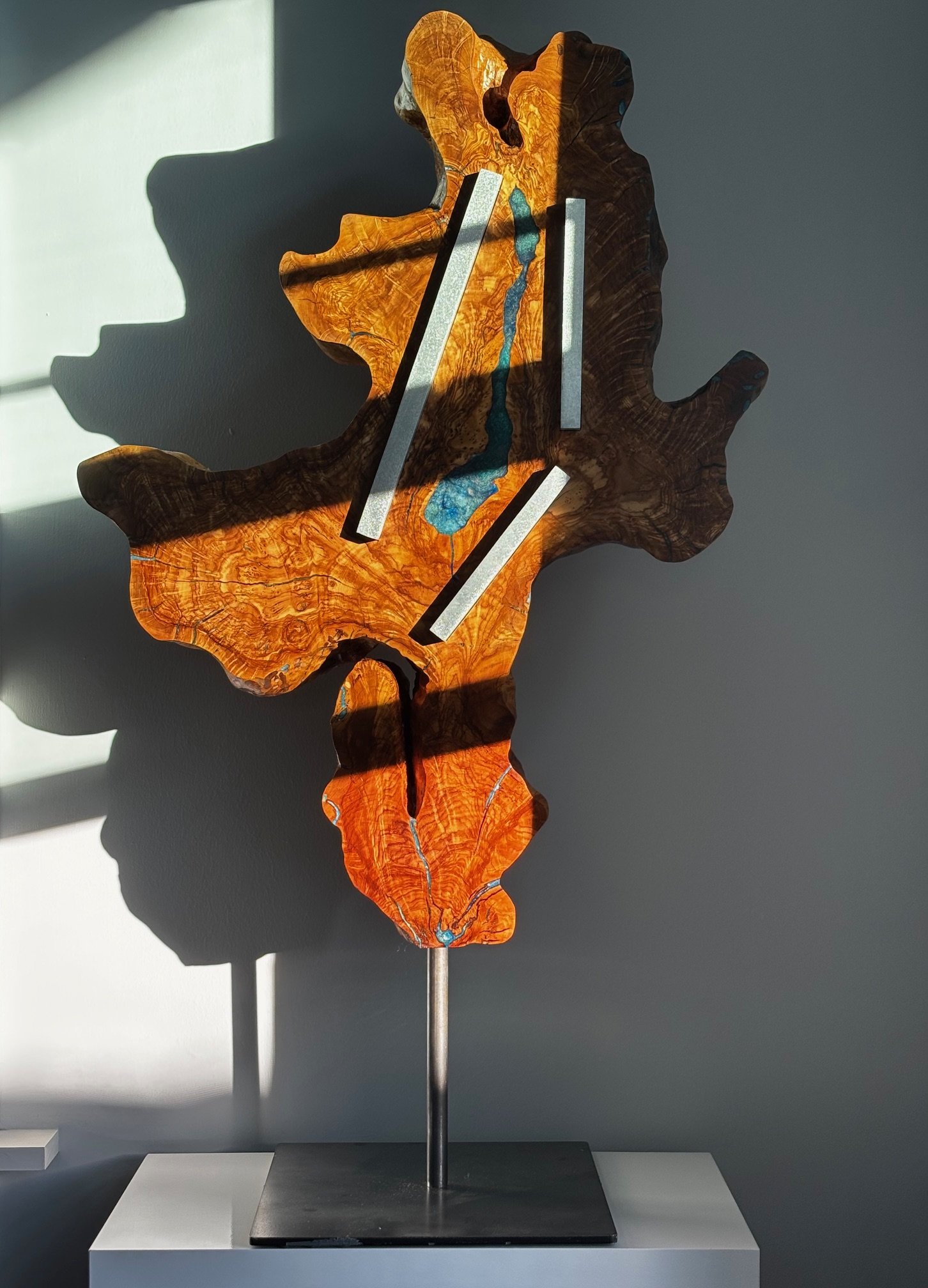
Olive wood (Olea europaea) with stainless steel and epoxy inlays.
20 lbs. 29” x 20” × 3”
This work, resembling a burning flame, draws from the physics of nuclear fusion - not as spectacle or promise, but as a study in tolerance under pressure. Fusion does not fail because of insufficient energy; it fails because small differences are amplified faster than they can be reconciled. Stability, when it appears, is conditional and continuously maintained.
That condition resonates beyond the physical system. Human communities operate under similar constraints. Coexistence depends less on achieving consensus than on constructing structures capable of holding divergence without collapse. The materials enact this directly. Rigid geometry imposes limits. The surrounding form responds along internal paths shaped by history rather than design. Their interaction does not resolve difference; it contains it. Order is present, but it is provisional, attentive, and never complete.
What is sustained here is not harmony, but proximity. A system held together through restraint rather than agreement, where tolerance is active rather than passive—and where stability remains something that must be continually earned.
Olive wood (Olea europaea) with stainless steel and epoxy inlays.
20 lbs. 29” x 20” × 3”
This work, resembling a burning flame, draws from the physics of nuclear fusion - not as spectacle or promise, but as a study in tolerance under pressure. Fusion does not fail because of insufficient energy; it fails because small differences are amplified faster than they can be reconciled. Stability, when it appears, is conditional and continuously maintained.
That condition resonates beyond the physical system. Human communities operate under similar constraints. Coexistence depends less on achieving consensus than on constructing structures capable of holding divergence without collapse. The materials enact this directly. Rigid geometry imposes limits. The surrounding form responds along internal paths shaped by history rather than design. Their interaction does not resolve difference; it contains it. Order is present, but it is provisional, attentive, and never complete.
What is sustained here is not harmony, but proximity. A system held together through restraint rather than agreement, where tolerance is active rather than passive—and where stability remains something that must be continually earned.