
 Image 1 of 5
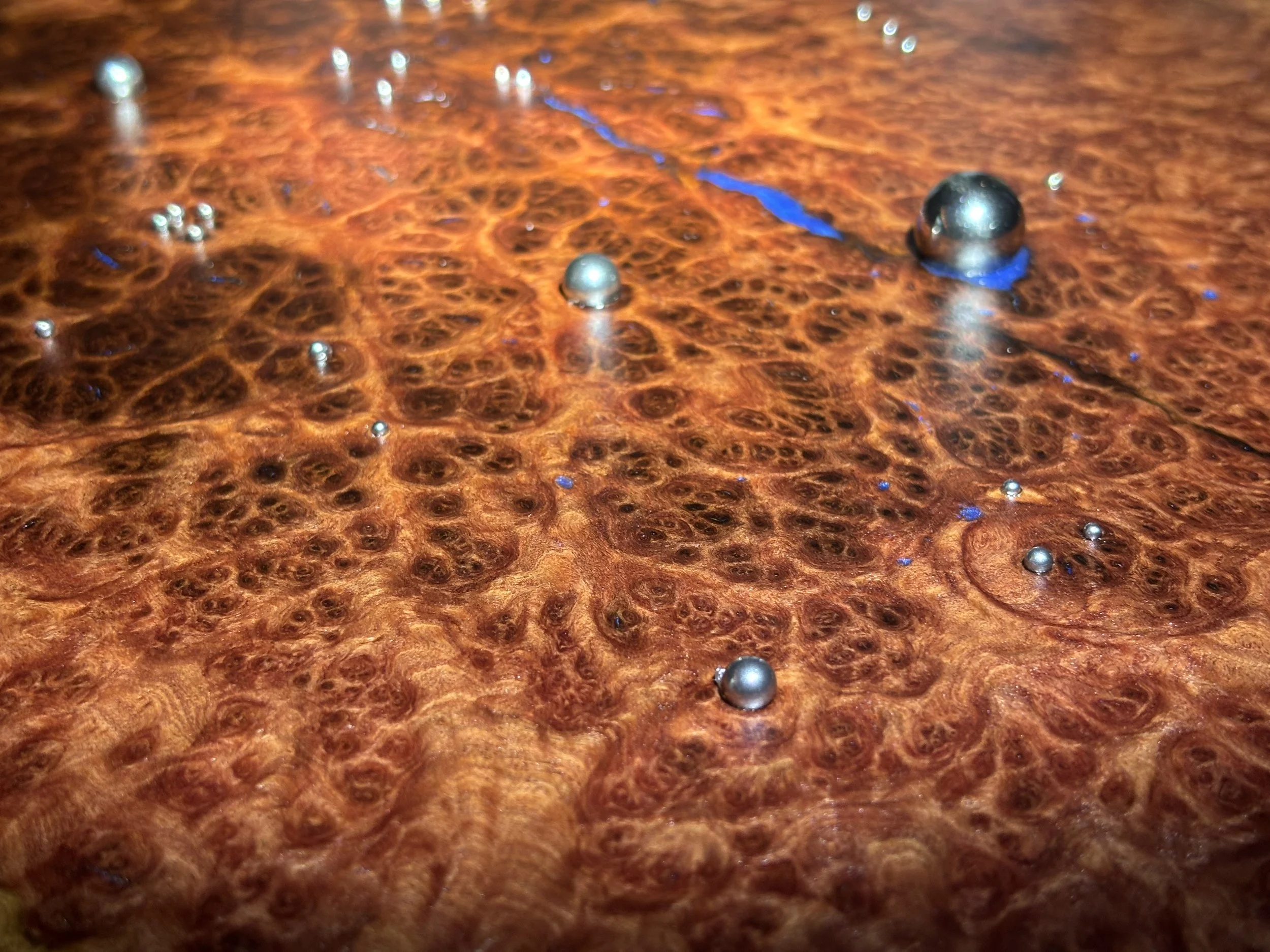 Image 2 of 5
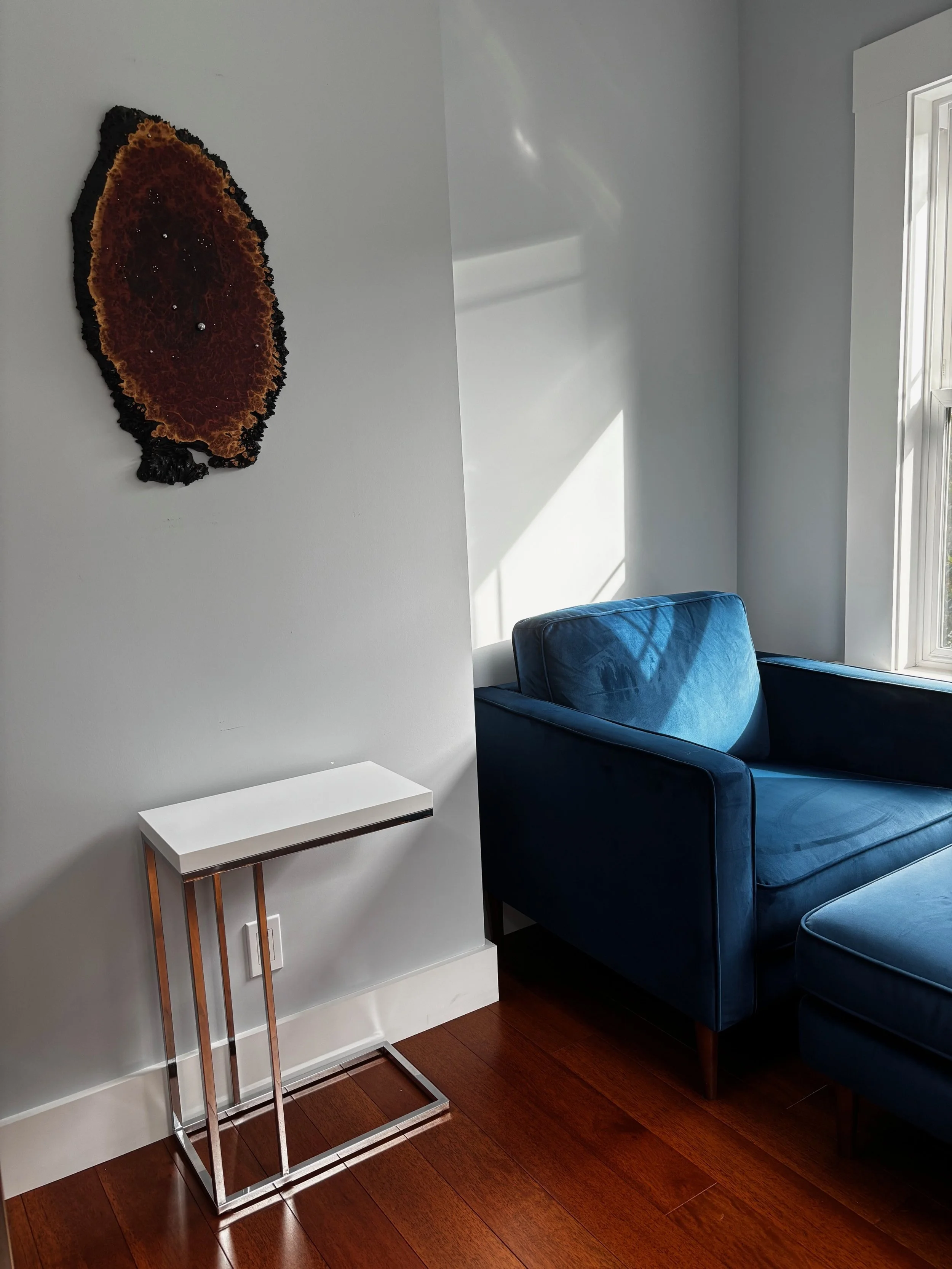 Image 3 of 5
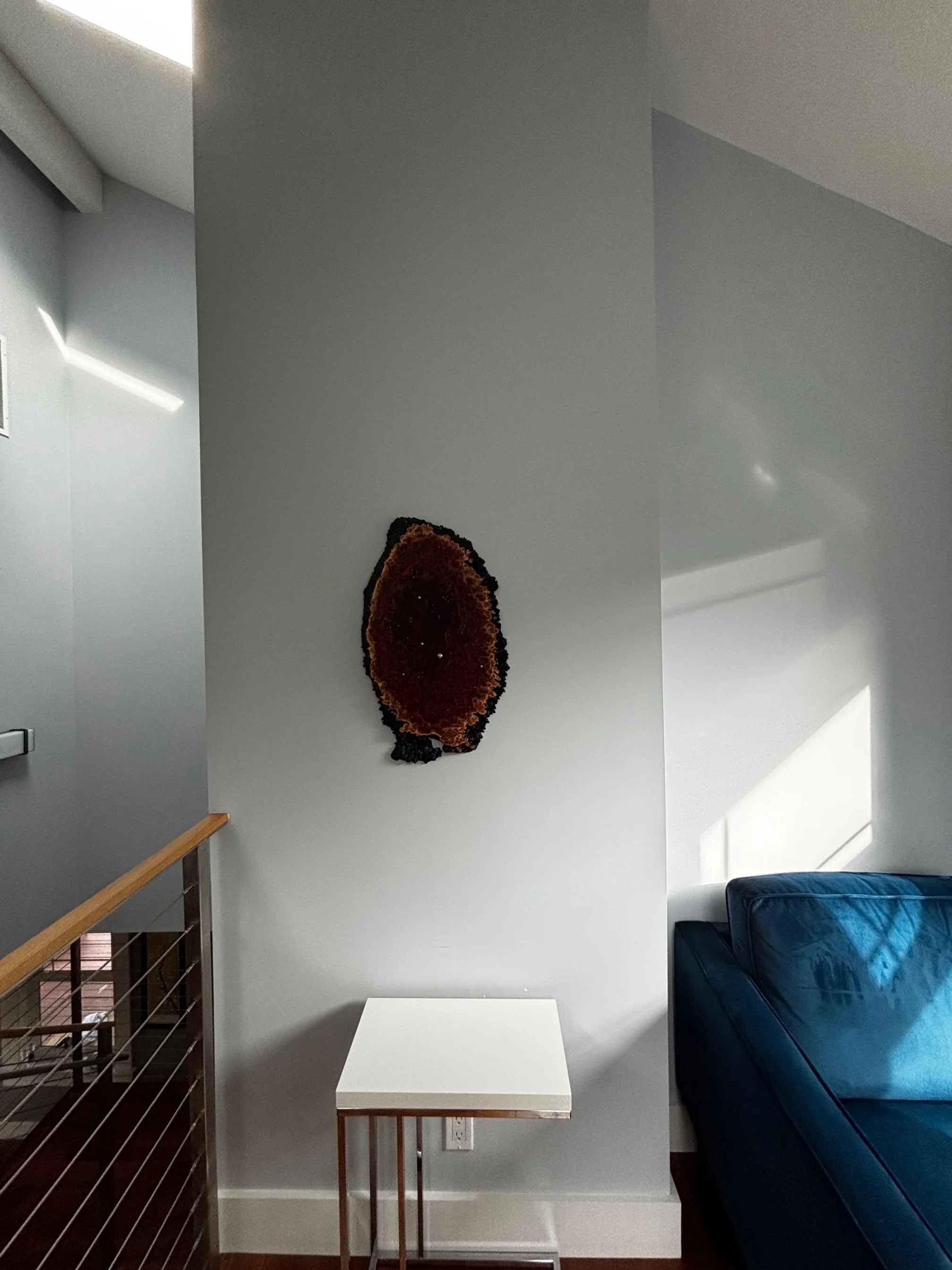 Image 4 of 5
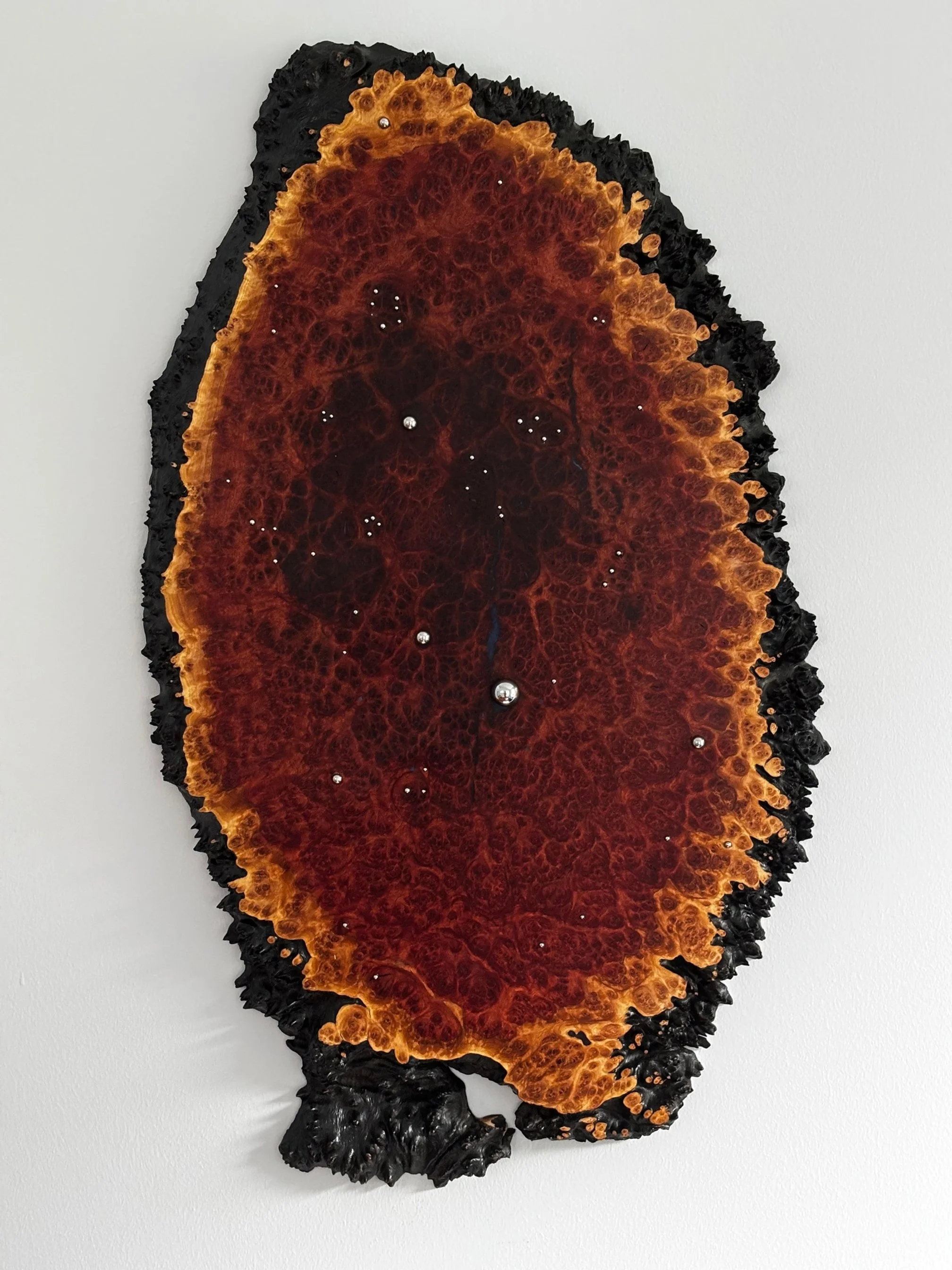 Image 5 of 5
Red Mallee Burl (Eucalyptus oleosa), stainless steel and epoxy inlays.
8 lbs. 22" x 13" x 1-3/4"
Supernova Residue No. 1 reflects on the remote conditions from which human life ultimately became possible. The work dwells on a threshold prior to life itself: the point at which raw matter, still marked by violence and dispersal, begins to approach the conditions from which future complexity might emerge. Every person begins in a chain of unlikely events extending back beyond biology to chemistry, and beyond chemistry to star-formed matter. What appears here as debris and fracture can also be understood as origin: the unstable material prehistory from which habitable worlds, living systems, and eventually conscious beings arise. The work does not depict life itself, but the improbable groundwork that made life possible.
Supernova Residue No. 1 frames creation not as a single act, but as a long sequence of contingencies. In that sense, it reflects not only on cosmic history, but on human origin: on how something capable of memory, thought, and vulnerability could emerge from scattered remnants, given enough time, matter, and chance.
Red Mallee Burl (Eucalyptus oleosa), stainless steel and epoxy inlays.
8 lbs. 22" x 13" x 1-3/4"
Supernova Residue No. 1 reflects on the remote conditions from which human life ultimately became possible. The work dwells on a threshold prior to life itself: the point at which raw matter, still marked by violence and dispersal, begins to approach the conditions from which future complexity might emerge. Every person begins in a chain of unlikely events extending back beyond biology to chemistry, and beyond chemistry to star-formed matter. What appears here as debris and fracture can also be understood as origin: the unstable material prehistory from which habitable worlds, living systems, and eventually conscious beings arise. The work does not depict life itself, but the improbable groundwork that made life possible.
Supernova Residue No. 1 frames creation not as a single act, but as a long sequence of contingencies. In that sense, it reflects not only on cosmic history, but on human origin: on how something capable of memory, thought, and vulnerability could emerge from scattered remnants, given enough time, matter, and chance.